
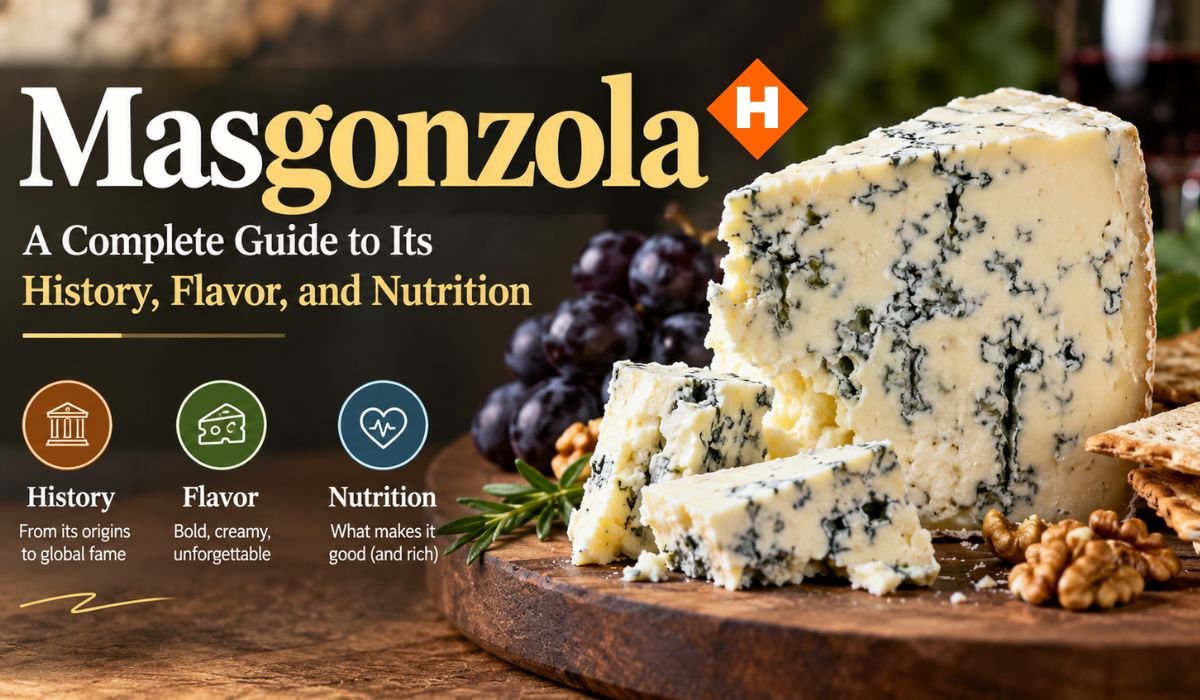
Masgonzola Is An Intriguing Cheese Specialty That Brings Together Two Very Different Italian Dairy Foods: Gorgonzola And Mascarpone. Gorgonzola contributes the salty, tangy character associated with blue-veined cheese, while mascarpone adds a soft, rich, and wonderfully creamy texture. The combination creates something that can deliver plenty of flavor without feeling quite as intense as Gorgonzola on its own.
The name, however, can be confusing. Masgonzola is sometimes described online as if it were a separate ancient cheese with its own centuries-old production tradition. The available evidence doesn’t establish it as a distinct protected cheese category. It’s more accurate to describe Masgonzola as a Gorgonzola-and-mascarpone preparation or specialty. Gorgonzola itself is different: it has a clearly documented Protected Designation of Origin in the European Union, along with defined rules covering its production and maturation.
That distinction doesn’t make Masgonzola any less interesting. In fact, the combination works because of the contrast between its two components. Gorgonzola supplies depth and personality, while mascarpone softens the overall experience. The result can be spread on bread, served on a cheese board, melted into pasta, stirred through risotto, added to pizza, or paired with sweet ingredients such as pears and figs.
Quick Bio Information
| Masgonzola Fact | Details |
|---|---|
| Name | Masgonzola |
| Food Type | Gorgonzola And Mascarpone Cheese Specialty |
| Main Ingredients | Gorgonzola And Mascarpone |
| Blue Cheese Component | Gorgonzola |
| Creamy Component | Mascarpone |
| Typical Texture | Soft, Rich, Creamy, And Spreadable |
| Typical Flavor | Tangy, Salty, Creamy, Savory, And Mildly Blue |
| Appearance | May Show Creamy White And Blue-Veined Sections |
| Protected Status | No Separate Masgonzola PDO Established |
| Gorgonzola Status | European Union PDO Cheese |
| Gorgonzola Milk | Pasteurized Whole Cow’s Milk Under The PDO Specification |
| Common Uses | Pasta, Risotto, Pizza, Sauces, Bread, And Appetizers |
| Popular Pairings | Pears, Figs, Apples, Walnuts, Honey, And Wine |
| Main Allergen | Milk |
| Flavor Intensity | Usually Softer Than Gorgonzola Alone |
| Production Formula | Can Vary By Product |
| Nutrition | Depends On The Gorgonzola-To-Mascarpone Ratio |
| Storage | Refrigeration Is Required |
| Best Feature | Combines Blue-Cheese Depth With Creamy Richness |
What Is Masgonzola?
Masgonzola is generally used to describe a combination of Gorgonzola and mascarpone. The name itself reflects the two components, with mascarpone providing the creamy side and Gorgonzola bringing the unmistakable blue-cheese character.
There’s no single universal Masgonzola formula that applies to every product. One version may have a stronger Gorgonzola presence, while another can be noticeably creamier because of a greater proportion of mascarpone. Some preparations blend the two cheeses into a relatively uniform mixture, while others keep them in visible layers.
That variation is worth remembering when searching for Masgonzola cheese. The name doesn’t necessarily guarantee an identical flavor, texture, or nutritional profile from one product to another. At its heart, though, the concept is simple: combine the depth of Gorgonzola with the smooth richness of mascarpone.
For people who enjoy blue cheese but aren’t looking for an especially sharp experience, that balance can be appealing. It keeps the character of Gorgonzola while making the overall texture softer and more approachable.
The History And Origins Of Masgonzola
The history of Masgonzola deserves a little caution. It’s tempting to describe it as an ancient Italian cheese, particularly because its name sounds closely connected to Gorgonzola. However, there isn’t strong documentary evidence establishing Masgonzola as a separate historic cheese with one recognized birthplace, original inventor, or traditional production standard.
The history of Gorgonzola itself is much better documented. Gorgonzola has a clearly defined identity as an Italian blue-veined cheese and holds Protected Designation of Origin status within the European Union. Its official specification sets out requirements covering production, ingredients, geographical origin, physical characteristics, and maturation.
Gorgonzola is made from pasteurized whole cow’s milk under its PDO specification. Its familiar blue-green or grey-blue veining develops during the cheesemaking and maturation process. The official rules also distinguish between different maturation styles.
Masgonzola is better understood in relation to that established tradition. By bringing Gorgonzola together with mascarpone, the preparation creates a softer and creamier way to enjoy the flavor of blue cheese. That’s also why descriptions of Masgonzola can vary between sources: unlike Gorgonzola PDO, it doesn’t have one protected formula that every producer must follow.
Is Masgonzola The Same As Gorgonzola?
No. Masgonzola and Gorgonzola are related, but they’re not the same food. Gorgonzola is the established Italian blue-veined cheese, whereas Masgonzola generally refers to a combination of Gorgonzola and mascarpone.
The distinction becomes clearer when you look at Gorgonzola’s official status. Its PDO specification defines the ingredients, geographical production requirements, characteristics, and maturation process. It also recognizes mild and strong styles, with specific maturation periods.
Those rules apply to Gorgonzola itself, not to Masgonzola. It’s therefore misleading to take every official Gorgonzola production requirement and automatically describe it as a Masgonzola rule.
The easiest way to remember the difference is this: Gorgonzola is the blue cheese, while Masgonzola is generally the creamy combination that incorporates Gorgonzola with mascarpone.
What Does Masgonzola Look And Feel Like?
Masgonzola doesn’t necessarily have one fixed appearance because the preparation can vary. A blended version may look predominantly pale and creamy, with blue veining distributed throughout. A layered version can be more visually striking, showing a contrast between pale mascarpone and the blue-veined Gorgonzola.
Texture is where the mascarpone component makes perhaps the biggest difference. Mascarpone is naturally soft and rich, giving the finished product a smooth, spreadable quality. Gorgonzola adds more structure and the characteristic mouthfeel associated with blue cheese.
Gorgonzola itself can range from soft and creamy in milder forms to firmer and more crumbly in stronger, more mature styles. When combined with mascarpone, however, the overall result can feel especially rich and smooth.
That makes Masgonzola particularly convenient for foods that benefit from a spreadable cheese. It can be worked onto bread or crackers without the firmness sometimes associated with more mature blue cheeses.
What Does Masgonzola Taste Like?
The flavor of Masgonzola comes from the contrast between its two main ingredients. Gorgonzola contributes salty, tangy, savory, earthy, and distinctly blue-cheese notes. Mascarpone brings a much gentler dairy flavor along with richness and creaminess.
Together, they create a more rounded taste. Masgonzola can still have the recognizable character of blue cheese, but the mascarpone helps soften the sharper edges.
Of course, the exact experience depends on the product. A preparation containing more Gorgonzola can taste considerably stronger than one with a higher proportion of mascarpone. The particular Gorgonzola used also matters, especially if it’s a more mature style.
For newcomers to blue cheese, Masgonzola can be an approachable starting point. For people already familiar with Gorgonzola, its appeal lies in the different texture and added richness.
How Is Masgonzola Made?
There’s no single protected production method for Masgonzola, so it shouldn’t be described as though every producer follows an identical traditional recipe. Instead, the two components are produced or obtained separately and then combined into the finished specialty.
The Gorgonzola component follows the established cheesemaking tradition associated with the cheese. Under its official European specification, Gorgonzola is made from pasteurized whole cow’s milk, with calf rennet and salt among the specified raw materials. Its characteristic blue veining develops as the cheese is produced and matured.
Mascarpone provides the second half of the equation. Its soft, creamy character changes the texture of the final preparation considerably.
Depending on the product, the two components can be blended together or arranged in layers. A blended version offers a more uniform experience, while a layered product lets the diner encounter the contrasting textures and flavors separately.
So, rather than thinking of Masgonzola as one cheese made through a single standardized recipe, it’s more useful to think of it as a specialty built around the combination of two established Italian dairy products.
What Milk Is Used In Masgonzola?
The milk question depends on the particular product, but Gorgonzola itself has a clearly defined standard. Under its European PDO specification, genuine Gorgonzola is made exclusively from pasteurized whole cow’s milk.
Masgonzola is different because it’s a combination product. Its final composition depends on the ingredients and proportions used by the producer. That’s why the packaging remains the most reliable source when you want to know exactly what’s inside a particular product.
This is also important for anyone dealing with food allergies. Masgonzola is a dairy-based specialty made from milk-derived ingredients, so people with a milk allergy should carefully check the ingredient and allergen information before eating it.
For dietary planning, assumptions based only on the name aren’t enough. Product labels can provide the specific information needed for ingredients, allergens, serving size, and nutrition.
How To Eat Masgonzola
Masgonzola is remarkably easy to incorporate into everyday meals. Its creamy consistency makes it a natural choice for fresh bread, toasted crostini, crackers, and other crisp foods. It can also sit comfortably on a cheese board alongside fruit, nuts, honey, and other accompaniments.
There’s no need to make it complicated. A small serving with a sweet fruit such as a pear can highlight the contrast between salty and sweet flavors. Walnuts can add crunch, while honey provides another layer of sweetness.
Masgonzola can also be enjoyed without cooking. Allowing cheese to reach an appropriate serving temperature can make its aroma and texture more noticeable, although it should always be handled and stored according to food-safety guidance.
Because the flavor is rich, a little can go a long way. That’s particularly useful when adding it to dishes where you want the cheese to complement the other ingredients rather than dominate them.
Masgonzola In Pasta, Risotto, And Pizza
Masgonzola’s creamy texture makes it especially useful in warm dishes. In pasta, it can melt into a sauce and create a rich base while adding the distinctive flavor of Gorgonzola. Mushrooms, walnuts, pears, spinach, and caramelized onions can all provide interesting contrasts.
Risotto is another natural match. Stirring Masgonzola into the rice near the end of cooking allows the cheese to melt through the dish, adding richness and savory depth without requiring a large amount.
Pizza and flatbreads offer another opportunity. Masgonzola can provide a creamy alternative to more familiar melting cheeses. Its salty character works particularly well with pears, figs, mushrooms, onions, and walnuts.
The key is balance. Because Masgonzola is rich, combining it with fresh, sweet, earthy, or slightly acidic ingredients can keep the finished dish from feeling too heavy.
Best Food And Drink Pairings
Masgonzola works especially well with foods that provide contrast. Sweet fruit can balance the cheese’s salty and tangy character, while nuts contribute crunch and toasted flavors.
Pears, apples, figs, walnuts, honey, and dried fruit are all natural companions. They can be served alongside the cheese or incorporated into a larger dish.
A small amount of dark chocolate can also create an interesting sweet-and-savory combination. The pairing works because both ingredients are rich, so moderation helps keep one from overwhelming the other.
Drink choices depend on the strength of the Masgonzola. A mild, creamy version can pair comfortably with sparkling or lighter options, while a more Gorgonzola-forward preparation can stand up to fuller red wines or sweet dessert wines.
Rather than following a rigid pairing rule, consider balance. Sweetness can offset saltiness, acidity can cut through richness, and a fuller drink can complement a stronger cheese.
Masgonzola Nutrition
There’s no single universal Masgonzola nutrition profile because the product isn’t governed by one standardized formula. The ratio of Gorgonzola to mascarpone can change from one preparation to another, and that can affect calories, fat, protein, carbohydrates, and minerals.
The original source material associated with Masgonzola gave estimated values of approximately 350 to 400 calories, 20 to 25 grams of protein, 28 to 32 grams of fat, and 1 to 2 grams of carbohydrates per 100 grams. It also identified calcium, phosphorus, vitamin A, and sodium as important nutritional components.
Those numbers should be regarded as general estimates rather than official nutrition facts for every Masgonzola product. If you’re tracking calories, sodium, fat, or protein, the nutrition panel on the actual product is the more dependable source.
The ingredients themselves explain why Masgonzola can be nutritionally dense. Gorgonzola contributes dairy protein, fat, calcium, phosphorus, and other nutrients, while mascarpone is a rich dairy product with a particularly creamy, high-fat profile.
That richness is worth remembering when planning portions. Masgonzola can add plenty of flavor without requiring a large serving.
Is Masgonzola Healthy?
It would be too simplistic to call Masgonzola either “healthy” or “unhealthy.” Like many rich dairy foods, it can provide useful nutrients while also contributing considerable calories, saturated fat, and sodium.
Protein and calcium are among the nutritional features that can make cheese a useful part of a balanced eating pattern. Phosphorus is another mineral found in dairy foods and plays important roles in normal body functions.
At the same time, people who have been advised to limit sodium, saturated fat, or overall calorie intake should pay attention to portion size and the nutrition information for their specific product.
It’s also important not to overstate claims about probiotics. The presence of cultures or microorganisms in cheese doesn’t automatically mean that a product should be considered a proven probiotic food. Processing, storage, formulation, and the microorganisms involved can all influence what remains in the finished product.
The most practical approach is moderation. Enjoying Masgonzola as part of a varied diet allows its flavor and nutritional qualities to be appreciated without treating it as a nutritional cure-all.
How To Store Masgonzola
Masgonzola should be refrigerated because it contains perishable dairy ingredients. The exact storage temperature and shelf life should always follow the manufacturer’s instructions, particularly when dealing with a commercially packaged product.
Good storage protects the cheese from excessive drying while also helping preserve its flavor and texture. Suitable food-safe cheese wrapping can help maintain quality, while the original packaging may provide the most appropriate instructions for a particular product.
The blue-green or grey-blue veining associated with Gorgonzola shouldn’t automatically be mistaken for spoilage. In fact, that veining is an expected characteristic of Gorgonzola and is part of what makes it recognizable as a blue-veined cheese.
Unexpected mold, an unusually rotten smell, excessive sliminess, damaged packaging, or other significant changes are different matters. The fact that Masgonzola contains a blue-veined cheese doesn’t mean every type of mold that appears later is safe.
When you’re unsure about a product’s condition, follow the manufacturer’s guidance and food-safety recommendations rather than relying solely on appearance.
Final Thoughts
Masgonzola is interesting precisely because it brings together two very different sides of Italian dairy tradition. Gorgonzola provides the salty, tangy, blue-veined character, while mascarpone contributes softness, richness, and a smooth finish.
That combination gives Masgonzola plenty of versatility. It can appear on a cheese board, be spread over bread, melt into pasta, enrich risotto, complement pizza, or be paired with fruit and honey. Its creamy texture can make the distinctive flavor of blue cheese more approachable without taking away the qualities that make Gorgonzola memorable.
For anyone researching Masgonzola in 2026, the most important thing is to separate well-established facts from descriptions that have been repeated without strong documentation. Gorgonzola has a clearly defined PDO identity and production specification, while Masgonzola is better understood as a Gorgonzola-and-mascarpone specialty whose exact composition can vary.
Once that distinction is clear, Masgonzola becomes easier to understand and appreciate. It isn’t simply another name for Gorgonzola. Instead, it represents a meeting point between bold blue-cheese flavor and gentle dairy creaminess. That balance is what gives it a place in both Italian-inspired cooking and modern everyday recipes.
FAQs About Masgonzola
What Is Masgonzola?
Masgonzola generally refers to a cheese specialty combining Gorgonzola with mascarpone. Gorgonzola provides the distinctive blue-cheese flavor, while mascarpone contributes a soft, rich, and creamy texture.
Is Masgonzola The Same As Gorgonzola?
No. Gorgonzola is a distinct Italian blue-veined cheese with Protected Designation of Origin status in the European Union. Masgonzola generally describes a combination of Gorgonzola and mascarpone, giving it a different composition and texture.
What Does Masgonzola Taste Like?
Masgonzola usually combines the salty, tangy, savory character of Gorgonzola with the mild and creamy qualities of mascarpone. Depending on the proportions used, it can range from gently blue and buttery to noticeably stronger and more savory.
Is Masgonzola A Blue Cheese?
Masgonzola contains Gorgonzola, which is a blue-veined cheese. However, it’s more accurate to describe Masgonzola as a Gorgonzola-and-mascarpone specialty rather than as a separate protected blue cheese variety.
How Is Masgonzola Used?
Masgonzola can be spread on bread and crackers or incorporated into pasta, risotto, pizza, flatbreads, sauces, salads, and appetizers. It also pairs naturally with pears, figs, apples, walnuts, and honey.
Is Masgonzola High In Calories?
It can be relatively energy-dense because both Gorgonzola and mascarpone are rich dairy foods. The actual calorie content varies according to the product’s formula, so checking the nutrition label is the best way to determine the amount in a particular serving.
Does Masgonzola Contain Milk?
Yes. Masgonzola is a dairy-based specialty made with Gorgonzola and mascarpone. Anyone with a milk allergy should check the product’s allergen information carefully before consuming it.
How Should Masgonzola Be Stored?
Masgonzola should be refrigerated and stored according to the manufacturer’s instructions. Because individual products can differ in ingredients and packaging, there isn’t one universal shelf-life rule that applies to every Masgonzola product.
Learn more and explore exciting content on: Who Is Fausto Xavier Aguilera? Inside Christina Aguilera’s Family Life







Leave a Reply