
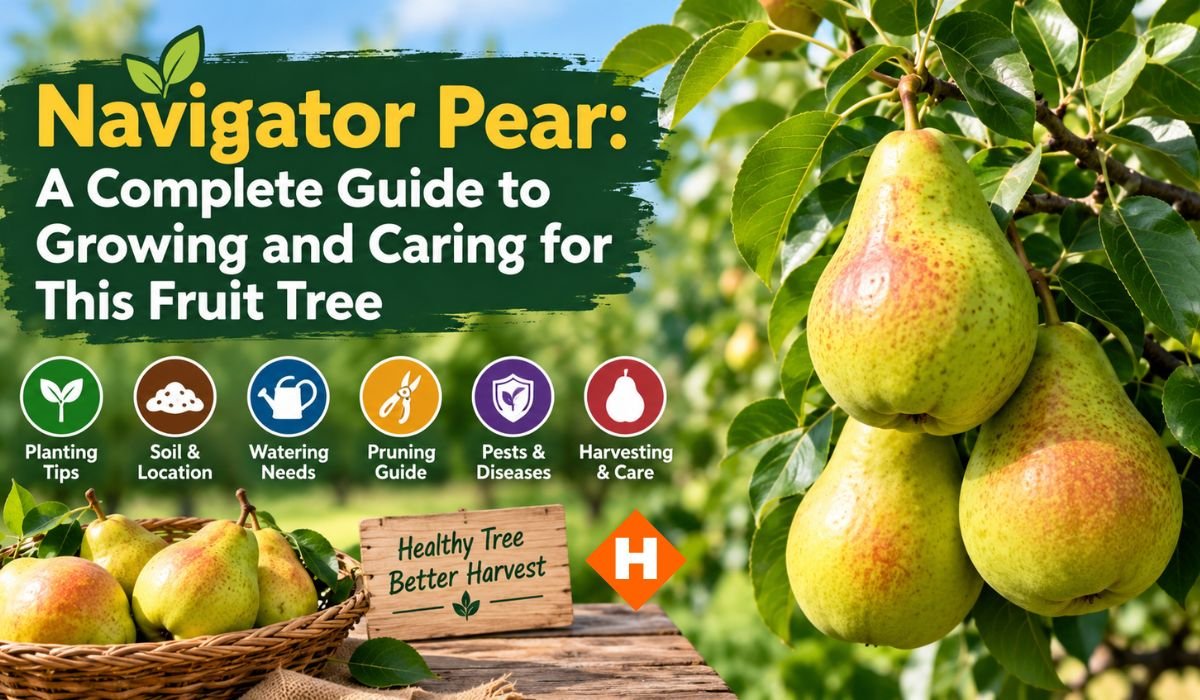
If You’re Looking For A Tree That Brings Together Spring Flowers, A Strong Upright Shape, Glossy Summer Foliage, And Warm Fall Color, Navigator Pear Is An Interesting Option. There’s One Important detail to understand before planting, though: despite its name, Navigator Pear is primarily sold as an ornamental pear tree, not as a traditional backyard fruit tree.
Nursery sources commonly identify it as Pyrus × ‘DurPSN303’. The tree is known for its dense, upright or pyramidal form, white spring flowers, green summer foliage, and yellow-orange fall color. Some horticultural sources also describe it as a particularly cold-hardy landscape tree that can work well in narrower spaces.
That distinction matters when choosing a tree. If your main goal is to grow pears for fresh eating, baking, or preserving, you’ll want a dedicated fruiting pear cultivar. If you’re looking for an attractive landscape tree with several seasons of visual interest, Navigator Pear has a very different role.
Navigator Pear Quick Facts
| Navigator Pear Information | Details |
|---|---|
| Common Name | Navigator Pear Or Navigator Ornamental Pear |
| Botanical Name | Pyrus × ‘DurPSN303’ |
| Plant Type | Deciduous Ornamental Tree |
| Family | Rosaceae |
| Primary Use | Landscape And Ornamental Planting |
| Growth Habit | Upright, Dense, Pyramidal |
| Flower Color | White |
| Bloom Time | Spring, Often Early To Mid-Spring |
| Summer Foliage | Glossy Green |
| Fall Color | Yellow-Orange To Yellow-Red, Depending On Source And Conditions |
| Light Requirement | Full Sun |
| Fruit | Small, Limited, Or Infrequent |
| Soil | Moist But Well-Drained |
| Landscape Value | Flowers, Upright Form, Foliage, Fall Color |
| Common Landscape Role | Vertical Accent Or Shade Tree |
| Published Height | Approximately 23–35 Feet, Depending On Source |
| Published Spread | Approximately 10–18 Feet, Depending On Source |
| Main Consideration | Mature Size And Local Growing Conditions |
Published measurements for mature Navigator Pear aren’t completely consistent. One nursery source lists the tree at roughly 23 to 26 feet tall and 10 to 13 feet wide, while another gives a mature height closer to 35 feet and a spread of around 18 feet. Because of that variation, it’s wise to check the mature dimensions of the specific nursery stock you’re buying instead of relying on a single number.
What Is Navigator Pear?
Navigator Pear is a deciduous ornamental pear commonly listed under the botanical name Pyrus × ‘DurPSN303’. It’s grown primarily for landscape appeal rather than for producing a heavy crop of dessert-quality fruit.
Its strongest characteristics are its shape and seasonal appearance. The tree develops a narrow, upright crown and produces clusters of white flowers in spring. During summer, the glossy green foliage creates a dense, structured canopy. As temperatures cool in autumn, the leaves can develop yellow, orange, or yellow-orange tones before dropping for winter.
This is an important distinction because the word “pear” can easily lead gardeners to assume they’re buying a traditional fruit tree. Navigator Pear shouldn’t be confused with familiar edible cultivars such as Bartlett or Bosc. Its main purpose is ornamental.
What Does A Navigator Pear Tree Look Like?
The upright architecture is one of the easiest ways to recognize a Navigator Pear Tree. Horticultural descriptions commonly characterize its form as dense, pyramidal, upright, or conical. That strong vertical growth can be especially useful in landscapes where a broad, spreading tree would take up too much room.
Spring brings the tree’s first major display. White flowers appear across the branches, giving the tree a fresh appearance after winter. Once flowering ends, glossy green leaves fill out the canopy and remain attractive throughout summer.
Autumn provides another seasonal highlight. Depending on growing conditions, the foliage can shift into yellow and orange shades before the tree enters dormancy. Even after the leaves fall, the upright branching structure can provide interest through winter.
For gardeners who value trees that change throughout the year, this combination of flowers, foliage, form, and fall color is one of Navigator Pear’s biggest strengths.
Navigator Pear Fruit: What Should You Expect?
This is one of the most important points for anyone searching for Navigator Pear Fruit.
Navigator Pear can produce fruit, but the fruit is generally described by nursery sources as small, limited, or infrequent. One horticultural source describes fruit around one inch in size, while another notes that the tree rarely fruits.
That means Navigator Pear shouldn’t be planted with the expectation of harvesting baskets of large, sweet pears for the kitchen. Its occasional fruit can be part of its ornamental character, but fruit production isn’t the reason this cultivar is commonly grown.
If your goal is to grow pears for eating, canning, baking, or preserving, choose a cultivar that has been specifically selected and documented for reliable edible fruit production in your climate. Fruiting pear trees have different considerations involving pollination, harvest timing, fruit quality, and storage.
Where Does Navigator Pear Grow Best?
Navigator Pear is marketed as a cold-hardy ornamental tree, although published hardiness information varies between horticultural sources. Some nursery listings place it in extremely cold zones, including Zone 2 or Zone 3.
Hardiness ratings should still be treated as a guide rather than an absolute guarantee. Local winter temperatures, wind exposure, soil conditions, moisture, and the health of the individual tree can all influence performance.
Before buying a tree, check the recommendation from a reputable local nursery, garden center, or cooperative extension service. Local advice can be particularly useful when your climate sits near the edge of a plant’s published hardiness range.
Full sun is another important consideration. A sunny location encourages healthy growth and flowering while helping the tree develop the dense canopy and attractive form for which Navigator Pear is known.
Choosing The Right Planting Location
When planting a Navigator Pear, think about the tree it will become rather than the small tree you see at the nursery.
Published mature dimensions vary considerably. Some sources list Navigator Pear at around 23 to 26 feet tall, while others place it closer to 35 feet. Width estimates also range from approximately 10 to 18 feet.
That’s why the planting location deserves careful thought. Keep the tree away from places where its mature branches could interfere with buildings, windows, walkways, driveways, fences, or overhead utilities.
Its upright growth habit can make Navigator Pear useful for vertical accent planting, front yards, boulevards, and other areas where a broad-canopied tree may not be practical.
Choose a location with plenty of sunlight and good drainage. Low areas where rainwater regularly collects are less suitable because prolonged wet conditions can create problems for the root system.
Soil Requirements For Navigator Pear
Navigator Pear is generally described as preferring moist but well-drained soil. One nursery source also notes that it performs well in higher-pH soil.
Good drainage is particularly important. Pear trees may appreciate consistent moisture, but their roots shouldn’t remain submerged or saturated for long periods.
If your garden has heavy clay soil, focus on improving the overall growing conditions rather than simply filling the planting hole with a large amount of loose compost. A small pocket of heavily amended soil can sometimes hold water around the roots.
A soil test can also be useful if you’re unsure about pH or nutrient levels. Testing gives you information you can actually use instead of guessing which amendments your tree needs.
How To Plant Navigator Pear
Start by choosing a healthy nursery tree with a strong structure and no obvious signs of disease or damage. Prepare the planting site before removing the tree from its container or protective packaging.
The planting hole should be broad enough to allow the roots to spread naturally. The tree should generally be planted at approximately the same depth at which it was growing in its container or nursery soil. If it has a graft union, keep that union clearly above the soil surface.
Once the tree is positioned correctly, backfill the hole carefully and water thoroughly. This helps settle the soil around the roots and removes large air pockets.
A layer of mulch can help conserve moisture, moderate soil temperatures, and reduce competition from grass and weeds. Keep the mulch away from direct contact with the trunk, however. Piling mulch against the trunk can keep the bark excessively damp and create additional problems.
Newly planted trees need regular attention while their root systems become established. During dry weather, provide enough water to keep the root zone adequately moist without leaving the soil constantly saturated.
Navigator Pear Spacing And Pollination
Because Navigator Pear is primarily an ornamental tree, pollination isn’t the main concern it would be with a backyard fruiting pear.
If you’re planting Navigator for its flowers, foliage, fall color, and upright shape, you don’t need another pear simply to enjoy those landscape features.
The situation is different if you’re interested in the small amount of fruit it may produce. Fruit development can be affected by flowering conditions and pollination, and nearby pear trees may influence fruit set.
However, it’s important not to treat Navigator as though it were a high-yield orchard cultivar. If producing edible pears is your priority, select a fruiting variety with documented pollination requirements and a compatible partner whose flowering period overlaps.
How To Water Navigator Pear
Watering is especially important during the first few seasons after planting. A young Navigator Pear has a relatively small root system and can dry out faster than an established tree.
Deep watering is generally more useful than frequent, shallow sprinkling. The exact schedule will depend on your soil type, rainfall, temperature, and local growing conditions. Sandy soils may dry quickly, while heavy clay can retain water for considerably longer.
As the tree becomes established, supplemental watering can usually be reduced when rainfall is sufficient. During prolonged dry spells, water deeply around the root zone rather than applying small amounts directly around the trunk.
Mulch can help slow evaporation and reduce competition from surrounding vegetation. Just remember to keep it several inches away from the trunk.
The goal is balanced moisture. Too little water can stress the tree, while excessive irrigation can create poorly aerated soil and contribute to root problems.
Fertilizing Navigator Pear
Fertilizer should be used thoughtfully rather than automatically. A tree that is already growing well doesn’t necessarily benefit from heavy feeding.
This is particularly important with pears because excessive nitrogen can stimulate vigorous, tender new growth. That type of growth can be more vulnerable to Fire Blight, a bacterial disease that affects pears and several related plants.
If Navigator Pear appears weak or its foliage suggests a nutrient deficiency, start by looking at the soil and growing conditions. A soil test can help determine whether nutrients or pH are actually limiting growth.
Avoid using large amounts of nitrogen simply because you want the tree to grow faster. Healthy, steady development is more useful in the long term than forcing excessive leafy growth.
How To Prune Navigator Pear
Navigator Pear’s natural upright form is one of its main landscape features, so pruning should work with that structure instead of constantly trying to reshape it.
Remove dead, broken, crossing, or diseased branches as needed. Branches that create severe crowding inside the canopy may also need attention because good spacing improves light penetration and air movement.
Young trees can be guided toward a strong central structure as they develop. Established trees generally need lighter maintenance rather than aggressive annual pruning.
Pear trees shouldn’t be pruned excessively. Heavy pruning can encourage vigorous new growth, and that can increase vulnerability to Fire Blight.
When disease is involved, pruning becomes a sanitation practice rather than a cosmetic task. Diseased material should be removed according to local horticultural guidance, and pruning tools should be disinfected between cuts.
Navigator Pear Care Through The Seasons
Navigator Pear care becomes much easier when it follows the tree’s natural seasonal cycle.
Winter is mainly about dormancy and structure. Inspect the tree for damaged branches and carry out necessary dormant pruning when conditions are appropriate.
Spring brings the white flowers and renewed growth. This is an important period for monitoring the tree for disease and insect activity. Late frosts can also damage flowers and new growth, particularly in exposed locations.
Summer is focused on maintaining healthy growth. Pay attention to soil moisture during hot or dry periods, control competing weeds, and inspect the foliage and branches regularly for signs of pests or disease.
Autumn brings the tree’s colorful foliage and the transition into dormancy. Once leaves fall, inspect the structure again and remove obviously diseased plant material from around the tree.
Following the seasons gives you a simple routine and makes it less likely that important maintenance will be overlooked.
Common Navigator Pear Pests And Diseases
Navigator Pear, like other pears, can encounter several common pest and disease problems. Fire Blight is among the most important concerns because it can affect both fruiting and ornamental pear trees.
Other potential pear problems include Pear Psylla, Codling Moth, Brown Rot, Scab, Cankers, And Other Fungal Or Insect Issues. The exact problems you’re likely to encounter depend heavily on your climate and local pest pressure.
Good growing practices can reduce risk. Avoid excessive nitrogen, maintain reasonable air circulation, don’t over-prune, and inspect the tree regularly.
Correct identification is essential before taking action. A blackened leaf or branch doesn’t automatically mean Fire Blight. Drought stress, winter injury, nutrient problems, insects, and other conditions can also cause discoloration.
If symptoms spread quickly or you’re unsure what you’re seeing, consult a local extension service, qualified arborist, or plant-disease specialist before removing large portions of the tree.
Fire Blight: What Navigator Pear Growers Should Know
Fire Blight is a bacterial disease caused by Erwinia amylovora. Pears are among the plants that can be affected, and the disease can become particularly noticeable during active spring growth.
Symptoms may include darkened flowers, wilting shoots, blackened leaves, and branch dieback. Infected growth can give the tree a scorched appearance, which is where the disease gets its common name.
Managing Fire Blight requires a different approach from treating a typical fungal leaf disease. Fungicides do not control the bacterium responsible for Fire Blight. Prevention, sanitation, and careful pruning are important parts of management.
If Fire Blight is suspected, infected wood should be removed according to reliable local horticultural recommendations. Pruning tools should be disinfected between cuts to reduce the possibility of spreading bacteria.
It’s also wise to avoid practices that encourage excessive soft growth. Heavy nitrogen applications and unnecessary severe pruning can stimulate the kind of vigorous new growth that is more susceptible to Fire Blight.
Is Navigator Pear Easy To Maintain?
Once established in an appropriate location, Navigator Pear can be relatively straightforward to care for. It doesn’t require an elaborate routine. The basics are adequate sunlight, good drainage, sensible watering, sufficient growing space, moderate pruning, and regular observation.
The biggest mistake can happen before the tree is even planted. Because Navigator can become a substantial tree, placing it in an unsuitable location may create years of pruning and space problems.
Take its mature size seriously when choosing a site. Giving the tree room to develop naturally is much easier than repeatedly cutting it back because it has outgrown its surroundings.
Can Navigator Pear Grow In A Container?
Container growing is generally more challenging for a tree with Navigator Pear’s eventual size. Depending on the nursery source, mature trees can reach roughly 23 to 35 feet.
A large container may be suitable for a young tree for a limited period, but keeping a full-size Navigator Pear permanently confined to a pot creates additional challenges. The roots have less room, watering becomes more critical, and the tree may eventually need repotting or another permanent location.
If space is extremely limited, a naturally compact ornamental tree may be a more practical long-term choice than trying to keep Navigator Pear small in a container.
Navigator Pear Vs. Fruiting Pear Varieties
The biggest difference between Navigator Pear and familiar eating pears such as Bartlett and Bosc is their intended purpose.
Navigator is primarily a landscape tree. Its major attractions are its upright form, white spring flowers, glossy foliage, and fall color. Its fruit is small or limited and isn’t the main reason the tree is cultivated.
Fruiting pear cultivars, on the other hand, are selected specifically for edible crops. Their fruit size, flavor, texture, harvest season, pollination needs, and storage characteristics are central to their value.
That distinction makes the buying decision relatively simple. If you want a decorative tree that provides seasonal interest, Navigator Pear can fit that role. If you want a dependable supply of pears for the kitchen, look for a fruiting cultivar that has been tested and recommended for your growing region.
Final Thoughts
Navigator Pear is best understood as an ornamental pear with strong landscape value rather than as a conventional backyard fruit tree. Its upright form, white spring flowers, glossy green foliage, and warm fall color give it several seasons of visual interest.
The most important step is to decide what you want from the tree before buying it. If your goal is a vertical landscape accent with attractive seasonal changes, Navigator Pear may be worth considering. If your priority is harvesting large, flavorful pears for fresh eating, baking, or preserving, a dedicated fruiting variety will be a better fit.
Once planted in the right location, Navigator Pear doesn’t require complicated care. Give it adequate sunlight, well-drained soil, enough room to reach its mature size, consistent moisture while it establishes, and thoughtful pruning. Avoid excessive fertilizer and keep an eye out for common pear diseases, particularly Fire Blight.
Most importantly, check the nursery label before purchasing. Confirm the botanical name, expected mature size, hardiness information, and intended use. That small amount of research can prevent a major mismatch between the tree you buy and the tree you actually need.
For the right landscape, Navigator Pear offers something more valuable than a heavy fruit harvest: a dependable ornamental presence that changes with the seasons and can become a distinctive part of the garden for years to come.
Frequently Asked Questions About Navigator Pear
Is Navigator Pear A Fruit Tree?
Navigator Pear is a pear hybrid used primarily as an ornamental landscape tree. It can produce some fruit, but horticultural descriptions characterize that fruit as small, limited, or infrequent. It shouldn’t be purchased with the expectation of a heavy harvest of dessert-quality pears.
What Is The Botanical Name Of Navigator Pear?
Navigator Pear is commonly listed as Pyrus × ‘DurPSN303’. Nursery naming can sometimes vary, so checking the botanical and cultivar name on the plant label is useful when buying or comparing trees.
How Tall Does Navigator Pear Get?
Published nursery measurements vary. One source lists a mature height of approximately 23 to 26 feet and a spread of 10 to 13 feet, while another gives a height of about 35 feet and a spread of approximately 18 feet. Actual size can also vary with climate, soil, root conditions, and growing environment.
Does Navigator Pear Produce Edible Pears?
Navigator Pear can produce small fruit, but it isn’t generally grown as an edible fruit tree. Available horticultural descriptions indicate that fruiting is limited or infrequent. Gardeners looking for a reliable food crop should choose a dedicated fruiting pear cultivar instead.
Does Navigator Pear Need Full Sun?
Yes. Full sun is recommended for Navigator Pear. A location with plenty of direct sunlight supports healthy growth, flowering, and development of its characteristic dense canopy.
What Soil Does Navigator Pear Prefer?
Navigator Pear is generally described as preferring moist but well-drained soil. One nursery source also notes that it can perform well in higher-pH conditions. Avoid planting it where water remains around the roots for extended periods.
Does Navigator Pear Need Another Tree For Pollination?
Not for its main ornamental purpose. You don’t need another pear simply to enjoy Navigator’s flowers, foliage, and landscape form. If you’re interested in its occasional fruit, pollination can influence fruit set, but the tree shouldn’t be treated like a high-yield orchard cultivar.
Is Navigator Pear Hardy?
Several nursery sources describe Navigator as a highly cold-hardy ornamental pear, with some listings placing it in Zone 2 or Zone 3. Because published ratings can differ and local conditions matter, gardeners should confirm the appropriate hardiness recommendation for their particular location before purchasing.
Learn more and explore exciting content on: What Is Bumetro? A Simple Guide to Connected Urban Travel















Leave a Reply