
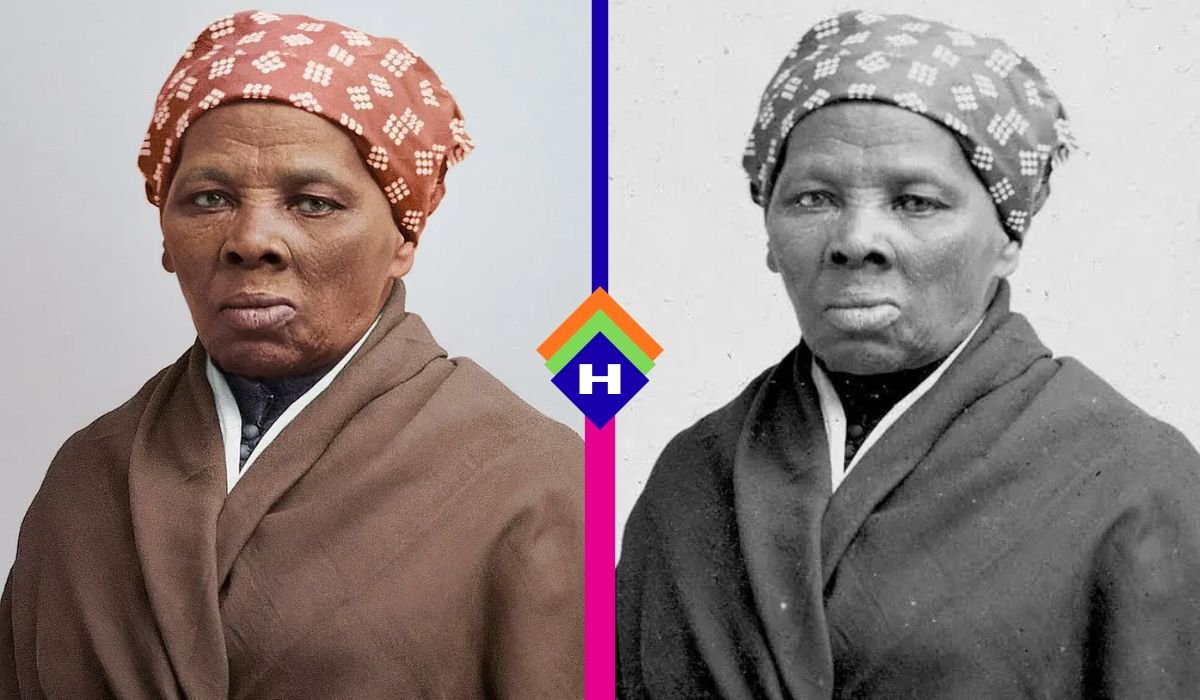
Harriet Tubman is remembered as one of the most courageous figures in American history. Born into slavery in Maryland, she endured violence, separation from her family and a serious head injury before escaping to freedom in 1849. But Tubman didn’t stop there. Instead of building a quiet life for herself, she repeatedly returned to dangerous slaveholding territory to help others escape.
Over the years, her work expanded far beyond the Underground Railroad. Tubman became a Civil War nurse, scout and spy, helped lead the Combahee River Raid, supported women’s suffrage and spent her later years caring for elderly and vulnerable Black Americans.
Her life wasn’t simply a story about escaping slavery. It was a lifelong commitment to freedom, service and community. Here’s a closer look at the remarkable journey of Harriet Tubman.
Quick Bio Information
Full Name: Harriet Tubman, born Araminta Ross.
Birth: In or around 1822 in Maryland.
Birth Name: Araminta “Minty” Ross.
Parents: Harriet “Rit” Green Ross and Benjamin Ross.
Siblings: Tubman was one of nine children.
Enslaved By: Edward Brodess.
Marriage To John Tubman: 1844.
Escape From Slavery: Fall 1849.
Escape Destination: Philadelphia.
Underground Railroad Role: Conductor and guide.
Return Missions: About 13 trips between 1850 and 1860.
People Helped To Freedom: More than 70 family members and friends, according to the National Park Service.
Civil War Roles: Cook, nurse, scout and spy.
Combahee River Raid: June 1863.
People Freed During Raid: More than 750 enslaved people.
Second Husband: Nelson Davis.
Adopted Daughter: Gertie.
Home For The Aged: Established in Auburn and opened in 1908.
Death: March 10, 1913.
Burial: Fort Hill Cemetery in Auburn, New York.
Who Was Harriet Tubman?
Harriet Tubman was born Araminta Ross, often called “Minty,” in Maryland in or around 1822. She was one of nine children born to Harriet “Rit” Green Ross and Benjamin Ross.
Her mother was enslaved while her father was free. Under the laws of the time, however, children inherited their mother’s enslaved status. That meant Tubman and her siblings were born into slavery.
Her enslaver was Edward Brodess, whose financial difficulties eventually created even greater uncertainty for the Ross family. Like many enslaved families, they faced the constant possibility of being separated and sold.
Despite the circumstances surrounding her childhood, Tubman developed a strong sense of independence that would shape nearly every part of her adult life.
Harriet Tubman’s Childhood Under Slavery
Tubman’s childhood was marked by hard labor and family separation. When she was about six years old, in 1828, she was rented out to work as a childcare provider. Being sent away from her mother and siblings at such a young age had a lasting effect on her.
As she grew older, Tubman was given increasingly difficult jobs. She eventually worked in fields and timber operations, gaining knowledge of Maryland’s Eastern Shore, including its waterways, marshes and surrounding landscape.
Those skills later proved invaluable. Her familiarity with the region would help her navigate the same territory while assisting people escaping slavery.
The Injury That Changed Harriet Tubman’s Life
When Tubman was about 13, she suffered a devastating head injury.
While she was at a local store, she refused to help capture an enslaved person who was attempting to escape. An enslaver responded by throwing a two-pound weight, which struck Tubman in the head and fractured her skull.
The injury affected her for the rest of her life. She experienced severe headaches, seizures and what were described as “sleeping spells.”
Historians and medical writers have discussed possible explanations for these symptoms, including narcolepsy and other neurological conditions. Her experiences also became closely connected to her religious faith and the visions she reportedly experienced.
Rather than allowing the injury to define her, Tubman continued working and gradually developed an extraordinary ability to endure hardship.
How Harriet Tubman Found Independence While Enslaved
Tubman eventually negotiated greater control over the work she performed. She was able to choose certain assignments and pay a yearly fee while hiring herself out.
This gave her a limited form of financial independence and allowed her to gain experience beyond the immediate control of her enslaver.
Her work also brought her into contact with Black sailors and other workers. Along with her knowledge of the Eastern Shore, these experiences expanded her understanding of geography and helped prepare her for the dangerous journeys that would come later.
Harriet Tubman and John Tubman
In 1844, Tubman married John Tubman, a free Black man. She was about 22 years old at the time.
Her name also changed from Araminta “Minty” Ross to Harriet Tubman, apparently taking Harriet from her mother’s name.
Her marriage to John didn’t prevent her from wanting freedom. In fact, as the possibility of being sold became increasingly real, Tubman’s determination to escape grew stronger.
Her enslaver, Edward Brodess, faced financial problems, and Tubman feared that she and her brothers Ben and Henry could be sold. Brodess died in March 1849, but the uncertainty surrounding the family didn’t disappear.
Why Harriet Tubman Decided to Escape Slavery
Tubman’s decision to escape was driven by the constant threat of separation, sale and continued enslavement.
She first attempted to escape with her brothers. They eventually turned back because they were afraid of what might happen. Tubman, however, decided to continue on her own.
It was a dangerous choice. An enslaved woman traveling alone faced enormous risks, including capture, violence and the possibility of being returned to slavery.
Still, Tubman continued north.
Harriet Tubman’s Escape to Philadelphia
In the fall of 1849, Tubman successfully escaped slavery and reached Philadelphia.
She relied on the landscape, waterways and stars to guide her journey. Once she arrived in Philadelphia, she encountered abolitionists and people connected to the Underground Railroad, including William Still.
Philadelphia offered Tubman something she had never truly possessed before: freedom.
But freedom for herself wasn’t enough.
Tubman soon made the decision to return to Maryland and help members of her family and others escape.
How Harriet Tubman Became a Conductor on the Underground Railroad
The Underground Railroad wasn’t an actual railroad. It was a secret network of people, homes, churches, routes and safe places that helped enslaved people move toward freedom.
People who helped guide escapees were often called conductors, while those who provided shelter were known as station masters.
Tubman became one of the network’s most famous conductors.
She knew the dangers because she had experienced slavery herself. She also understood the terrain and knew how to move carefully through areas where capture was always possible.
Her missions required secrecy, planning and courage. A single mistake could have placed both Tubman and the people traveling with her in grave danger.
Harriet Tubman’s Dangerous Missions to Free Enslaved People
After reaching freedom, Tubman returned repeatedly to Maryland to help others escape.
According to the National Park Service, she made about 13 return trips between 1850 and 1860 and helped more than 70 family members and friends reach freedom.
Her reputation grew quickly. She became known as “Moses,” a reference to the biblical figure who led enslaved Israelites toward freedom.
Tubman traveled primarily at night and relied on secrecy, careful planning and her knowledge of the landscape. Her missions were especially dangerous because enslavers offered rewards for the capture of escaped enslaved people and those who helped them.
Her own safety was never guaranteed. Yet she continued going back.
The Fugitive Slave Act Made Her Work More Dangerous
Tubman’s missions became even more dangerous after the Fugitive Slave Act of 1850.
The law strengthened federal enforcement against escaped enslaved people and required officials and citizens in free states to assist in their capture. As a result, reaching a free state didn’t necessarily guarantee safety.
For many freedom seekers, Canada became the safest destination.
Tubman’s work increasingly extended beyond simply reaching northern states. She helped people continue farther north when necessary, eventually settling in Canada for periods of time and later establishing herself in Auburn, New York.
Her determination was remarkable because every return trip meant voluntarily entering territory where she could have been captured.
Harriet Tubman and John Brown
Tubman’s work also brought her into contact with abolitionist John Brown.
Brown was planning an armed attack on the federal arsenal at Harpers Ferry, Virginia, in an effort to launch a rebellion against slavery. Tubman helped him with planning, geographic knowledge and recruitment.
Brown reportedly referred to her as “General Tubman.”
She understood the geography of the region and helped Brown gather information and support. However, Tubman wasn’t present when Brown’s raid took place in 1859. She was reportedly ill at the time.
Brown was captured and later executed.
Although his campaign ended in failure, his relationship with Tubman demonstrated the increasingly broad role she was playing in the fight against slavery.
Harriet Tubman During the Civil War
When the Civil War began in 1861, Tubman found another way to serve the cause of freedom.
She went to the South and initially worked as a cook, nurse and humanitarian worker. She used knowledge of natural remedies to care for soldiers and formerly enslaved people.
Her responsibilities eventually expanded.
Tubman became a scout and spy, gathering intelligence and helping Union forces understand the terrain and movements of Confederate forces. She also helped recruit formerly enslaved people to the Union cause.
Her experience traveling secretly through slaveholding territory made her particularly valuable.
Combahee River Raid and Harriet Tubman’s Military Legacy
One of the most important chapters in Tubman’s life came in June 1863, when she helped organize the Combahee River Raid in South Carolina.
Tubman worked with Union Colonel James Montgomery and used intelligence gathered from local Black communities, including people familiar with the waterways.
The raid involved Union troops traveling along the Combahee River. The operation resulted in the liberation of more than 750 enslaved people.
Many of the men who gained their freedom during the raid later joined the Union Army.
Tubman’s role was extraordinary. She helped gather intelligence, understand the waterways and organize information that contributed to the operation’s success. She is widely recognized as the first woman in American history to plan and lead an armed military raid.
Her Civil War service later became part of her broader military legacy. In June 2021, the U.S. Army inducted Tubman into its Military Intelligence Corps Hall of Fame.
Life After the Civil War
After the Civil War, Tubman’s work didn’t end.
She continued supporting Black communities, helping people in need and advocating for greater rights and opportunities.
Tubman had already established strong ties to Auburn, New York. In 1859, she purchased property there from William Seward, a prominent abolitionist and U.S. politician.
Auburn eventually became her long-term home and the center of much of her later work.
Instead of stepping away from public life, Tubman devoted herself to helping others and building a community around her.
Harriet Tubman and Nelson Davis
In 1869, Tubman married Nelson Davis in Auburn.
Davis later helped build the home where they lived. The couple also adopted a daughter named Gertie.
Their marriage was an important part of Tubman’s later life, although she continued to pursue the causes that had shaped her since her escape.
Nelson Davis died in 1888.
Tubman continued her work for another 25 years, carrying on her commitment to helping people who had few resources or support.
Harriet Tubman and the Home for the Aged
One of Tubman’s most important postwar achievements was her work to establish a home for elderly and vulnerable Black people.
The Home for Aged and Indigent Negroes eventually opened in Auburn in 1908. Tubman helped create a place where older people and others in need could receive care and support.
The people she helped included individuals living with disabilities and serious health challenges, including paralysis, epilepsy and visual impairment.
This work reflected another important part of Tubman’s legacy. Her fight for freedom wasn’t limited to escape from slavery. She also believed in creating a community where people could live with dignity and receive care.
She worked with the African Methodist Episcopal Zion Church, which supported her efforts and helped raise money connected to the home.
Harriet Tubman and Women’s Suffrage
Tubman’s activism also extended to the women’s rights movement.
She supported women’s suffrage and worked alongside prominent reformers, including Susan B. Anthony, Lucretia Mott and Elizabeth Cady Stanton.
She attended women’s rights conferences and spoke about her experiences and the broader struggle for equality.
For Tubman, freedom wasn’t a single issue. Her life’s work connected the fight against slavery with broader questions about equality, dignity and human rights.
Her role in the women’s suffrage movement added another dimension to a legacy that had already crossed the boundaries of abolition and military service.
Harriet Tubman’s Final Years and Death
Tubman spent her final years in Auburn, surrounded by the community she had worked so hard to build.
Even in old age, she remained involved with the Home for the Aged and continued supporting people who needed assistance.
She died on March 10, 1913, at the age of 91 after developing pneumonia.
Tubman was buried at Fort Hill Cemetery in Auburn, New York.
Her death marked the end of an extraordinary life, but it didn’t diminish the influence of her work. The principles that guided her—freedom, courage, faith, service and community—continued to shape how later generations remembered her.
Harriet Tubman’s Lasting Legacy
Harriet Tubman’s legacy reaches far beyond the Underground Railroad.
She escaped slavery and then risked her own freedom repeatedly to help others. She became a conductor on the Underground Railroad, worked as a nurse and spy during the Civil War, helped lead a military raid, supported women’s suffrage and spent her final decades caring for elderly and vulnerable people.
Her story also challenges the idea that freedom is simply something a person receives. For Tubman, freedom carried responsibility. Once she reached safety, she chose to return to danger because she believed other people deserved the same opportunity.
That sense of responsibility is perhaps the most enduring part of her story.
Tubman is remembered not only for what she survived but also for what she did with her freedom. She turned personal liberation into a lifelong mission to help others.
Frequently Asked Questions About Harriet Tubman
Who Was Harriet Tubman?
Harriet Tubman was an abolitionist, Underground Railroad conductor, Civil War nurse, scout and spy who escaped slavery and later helped others reach freedom.
When Did Harriet Tubman Escape Slavery?
Tubman escaped slavery in the fall of 1849. She traveled alone and eventually reached Philadelphia.
How Many People Did Harriet Tubman Help Escape?
The National Park Service says Tubman made about 13 return trips between 1850 and 1860 and helped more than 70 family members and friends escape slavery.
What Was Harriet Tubman’s Role In The Civil War?
During the Civil War, Tubman worked as a cook, nurse, scout and spy. She gathered intelligence and helped Union forces in South Carolina.
What Happened During The Combahee River Raid?
In June 1863, Tubman helped organize the Combahee River Raid in South Carolina. The operation freed more than 750 enslaved people, and many men later joined the Union Army.
Who Was Harriet Tubman’s Second Husband?
Tubman married Nelson Davis in 1869 in Auburn, New York. They remained together until his death in 1888.
When Did Harriet Tubman Die?
Harriet Tubman died on March 10, 1913, at the age of 91 after pneumonia. She was buried at Fort Hill Cemetery in Auburn, New York.
Why Is Harriet Tubman Important Today?
Tubman’s importance extends beyond her work on the Underground Railroad. She fought slavery, supported the Union during the Civil War, advocated for women’s rights and spent her later years caring for elderly and vulnerable Black people. Her life remains a powerful example of courage, resilience and service.
Learn more and explore exciting content on: DD Osama Age and Biography: Everything to Know About the Rapper















Leave a Reply