
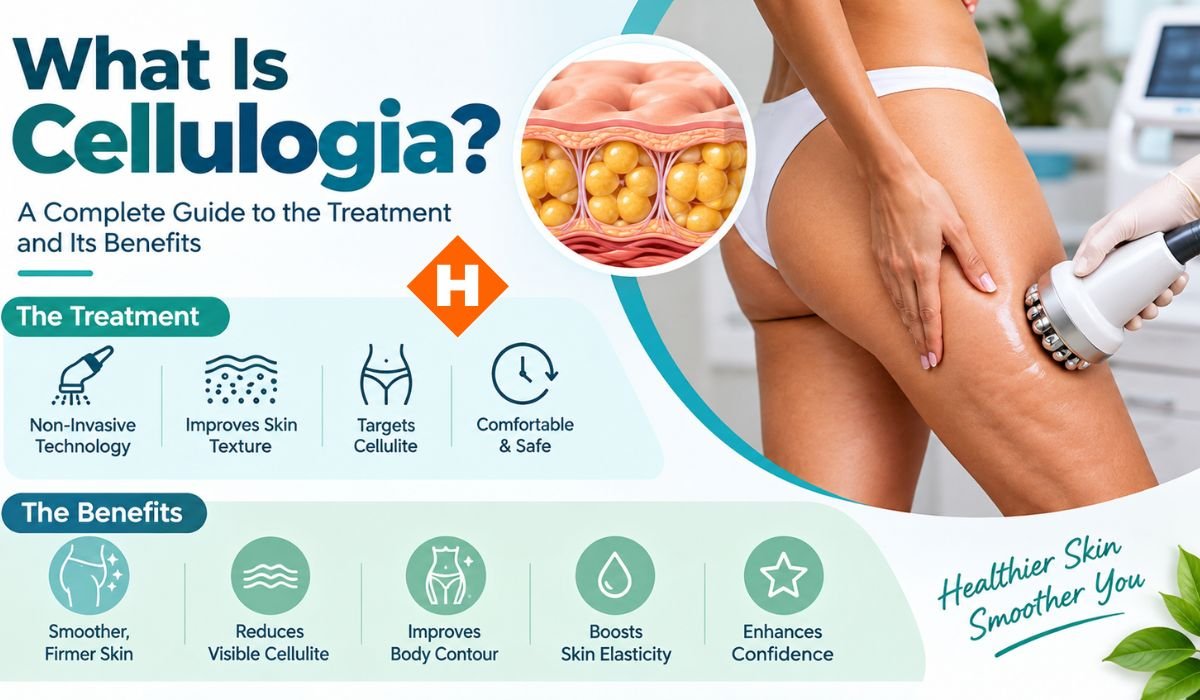
If you’ve been looking into ways to make cellulite less noticeable without undergoing surgery, you may have come across the term Cellulogia. It’s generally associated with non-invasive cosmetic treatments that use mechanical massage, rollers, suction, vibration, or similar techniques to work on the skin and superficial tissues. For people who want a cosmetic treatment without incisions or a lengthy recovery period, that can sound appealing.
There’s an important point to understand before making an appointment, though. Cellulogia isn’t necessarily the name of one standardized procedure or one specific machine. Different clinics and providers may use different devices, settings, and treatment methods under similar terminology. In other words, knowing the exact equipment being used is often more useful than simply knowing that a clinic offers “Cellulogia.”
It’s also important not to confuse Cellulogia with weight loss. Non-invasive body-contouring treatments can change the appearance of a particular area, but they aren’t designed to treat obesity or provide the broader health benefits associated with losing weight. The FDA makes a similar distinction when discussing non-invasive body-contouring technologies.
Quick Bio Information
| Cellulogia Fact | Information |
|---|---|
| Treatment Type | Non-Invasive Cosmetic Treatment |
| Main Purpose | Improving The Appearance Of Cellulite |
| Common Techniques | Mechanical Massage, Rolling, Suction, Or Vibration |
| Surgical Incisions | Generally None |
| Anesthesia | Generally Not Required |
| Common Target Areas | Thighs, Buttocks, Hips, Abdomen, And Upper Arms |
| Main Concern Addressed | Dimpled Or Uneven-Looking Skin |
| Weight-Loss Treatment | No |
| Treatment Results | Vary Between Individuals |
| Session Number | Depends On The Device And Treatment Plan |
| Possible Temporary Effects | Redness, Tenderness, Swelling, Discomfort, Or Bruising |
| Maintenance | May Be Recommended |
| Evidence | Depends On The Specific Technology |
| Treatment Goal | Cosmetic Improvement |
| Best First Step | Identify The Exact Device |
| Professional Screening | Recommended |
| Expected Downtime | Usually Limited For Mechanical Treatments |
| Permanent Cellulite Cure | Should Not Be Assumed |
What Is Cellulogia?
So, what exactly is Cellulogia? In general terms, it refers to an appearance-focused cosmetic approach that uses mechanical movement to manipulate the skin and superficial tissues. Depending on the equipment, the treatment head may combine rollers with controlled suction, although the precise method varies between devices.
The goal is usually straightforward: make cellulite or uneven-looking skin appear less noticeable. Some treatments may also provide a sensation similar to a deep massage, which can be a pleasant part of the experience for some people.
What Cellulogia shouldn’t be presented as is a guaranteed way to permanently remove cellulite or destroy fat cells. Those are much stronger claims than the treatment name alone can support.
That distinction matters because cellulite isn’t simply excess body fat. It involves the relationship between the fat beneath the skin, connective tissue, and the structure of the skin itself. A person can have visible cellulite without being overweight, and losing weight doesn’t necessarily make cellulite disappear.
For anyone considering treatment, one of the smartest first steps is to ask the provider for the exact device name and model. Once you know the equipment being used, you can look at its intended purpose, safety information, and evidence instead of relying entirely on a general marketing term.
How Does Cellulogia Work?
The mechanics behind Cellulogia depend on the device, but mechanical cellulite treatments generally work through controlled movement, pressure, rolling, suction, vibration, or a combination of these actions. A treatment head may gently lift and move the skin while rollers or other components pass over the treatment area.
The FDA describes mechanical body-contouring technologies that use massage or vibration as treatments that may temporarily improve the appearance of cellulite. Mechanical pressure and vibration can affect superficial tissues and fluid between fat cells, potentially changing how an area looks.
That doesn’t mean every Cellulogia treatment permanently alters the underlying structure of cellulite. Nor should mechanical massage automatically be treated as equivalent to procedures specifically designed to reduce localized fat.
Other body-contouring technologies use very different mechanisms. Depending on the procedure, they may rely on controlled cooling, heat, ultrasound, light, or another form of energy. As a result, a claim made about one type of technology shouldn’t automatically be applied to every treatment described as Cellulogia.
This is also why phrases such as “melts fat” deserve a closer look. Unless the specific device is designed for fat reduction and there is appropriate evidence behind the claim, mechanical massage shouldn’t be portrayed as a fat-destroying procedure.
What Is Cellulite And Why Does It Appear?
Cellulite is one of those cosmetic concerns that can affect people who otherwise appear completely healthy. It creates a dimpled, bumpy, or uneven texture on the skin and is particularly common around the thighs, hips, buttocks, and abdomen. The upper arms can also be affected.
One of the main reasons cellulite develops has to do with the way fat and connective tissue sit beneath the skin. Fat can push upward toward the skin while fibrous connective bands pull sections of the skin downward. The result is the familiar uneven or dimpled appearance.
There isn’t one single cause. Genetics, hormones, age, skin elasticity, body composition, muscle tone, and weight can all influence how visible cellulite becomes. Genetics can be especially important, which helps explain why someone who exercises regularly and maintains a healthy weight can still have noticeable cellulite.
That’s worth emphasizing because cellulite isn’t a sign that someone has failed to exercise or maintain a healthy lifestyle. It’s a common structural feature of the skin and underlying tissue, and treating it is primarily a cosmetic choice.
Understanding this also puts Cellulogia into perspective. The treatment is aimed at changing appearance, not correcting a medical problem caused by excess weight.
What Are The Main Benefits Of Cellulogia?
The main reason people seek Cellulogia is cosmetic improvement. Depending on the treatment and the individual, mechanical stimulation may make cellulite look less prominent or give an uneven area a temporarily smoother appearance.
There may be an additional benefit for people who enjoy massage. The rolling or pressure created by some devices can feel similar to a deeper mechanical massage, although the experience depends on the machine and its settings.
Some providers may also describe these treatments in terms of circulation, fluid movement, skin firmness, or body contouring. Those claims shouldn’t all be treated as established outcomes of every Cellulogia procedure. The evidence can differ significantly between technologies.
Research into vacuum-like massage treatments has produced mixed findings. The American Academy of Dermatology notes that some people may see an improvement in cellulite, but the effect can be temporary and may disappear after treatment stops.
For that reason, it makes more sense to think of Cellulogia as a possible cosmetic improvement rather than a guaranteed solution. One person’s results aren’t necessarily a reliable prediction of what another person will experience.
Can Cellulogia Help With Body Contouring Or Fat Reduction?
This is where cosmetic terminology can become confusing. Cellulite improvement, body contouring, and weight loss are not the same thing.
Body contouring is a broad term for procedures intended to change the shape or appearance of a particular area. Some non-invasive technologies are specifically designed to reduce small amounts of localized fat, while others are intended to improve the appearance of cellulite or alter the surface appearance of tissue.
The FDA explains that non-invasive body contouring isn’t intended to treat obesity and doesn’t provide the health benefits associated with weight loss.
That distinction is important for anyone researching Cellulogia. If your goal is significant weight loss, mechanical massage isn’t an alternative to appropriate nutrition, physical activity, behavioral approaches, or medical care when needed.
Likewise, if your main concern is a small pocket of localized fat, you shouldn’t assume that a cellulite-focused mechanical treatment will provide the same results as a technology specifically intended for fat reduction. Always ask what the actual device is designed to do.
Which Areas Can Be Treated With Cellulogia?
The thighs and buttocks are common treatment areas because cellulite frequently appears there. Depending on the device and the provider’s protocol, Cellulogia-style treatments may also be offered on the hips, abdomen, or upper arms.
Treatment settings shouldn’t simply be copied from one part of the body to another. Skin thickness, sensitivity, tissue structure, and the size of the area can all differ. A practitioner should assess the treatment area and use settings appropriate for the specific equipment.
The condition of the skin matters, too. An area that’s irritated, inflamed, infected, or injured may not be suitable for mechanical treatment. Device-specific instructions should always be followed rather than assuming that every body area can be treated in the same way.
What Happens During A Cellulogia Treatment Session?
A good Cellulogia appointment should start with a conversation. Before the device is used, the practitioner should discuss your cosmetic goals and ask about relevant medical conditions, medications, skin problems, previous procedures, and other factors that could affect treatment.
Once the treatment area has been assessed, the practitioner can prepare the skin and equipment according to the device’s instructions. The treatment head is then moved across the selected area using the appropriate pressure, suction, rolling motion, or vibration.
What does it feel like? That varies, but people may notice pulling, rolling, pressure, vibration, or something similar to a deep massage. Some find the sensation comfortable, while others may experience mild discomfort or tenderness.
One of the main attractions of mechanical Cellulogia-style treatments is that they generally don’t involve surgical incisions. That usually means much less recovery than an invasive cosmetic procedure. Still, “non-invasive” shouldn’t be interpreted as “risk-free.”
Temporary redness, discomfort, swelling, or bruising can occur with mechanical body-contouring procedures, particularly when pressure or suction is involved.
How Long Does A Cellulogia Session Take?
There’s no single standard length for a Cellulogia session. The time required depends on the device, the size of the treatment area, the number of areas being addressed, and the provider’s treatment protocol.
Some clinics may advertise sessions of approximately 30 to 60 minutes. That’s best understood as a general example rather than a universal standard.
The appointment may also include consultation, assessment, photographs, measurements, preparation, and post-treatment instructions. Someone treating one small area may spend much less time with the device than someone receiving treatment across several larger areas.
It’s also worth remembering that longer doesn’t necessarily mean better. Treatment time and intensity should be based on the device instructions and an appropriate treatment plan, not on the assumption that more mechanical stimulation will automatically produce better results.
How Many Cellulogia Sessions Do You Need?
There’s no universal number of Cellulogia sessions that guarantees a particular result. A provider may recommend several appointments, but the proposed schedule can depend on the specific device, treatment area, appearance of cellulite, cosmetic goals, and individual response.
Some clinics recommend an initial series followed by occasional maintenance treatments. That approach may be suggested because improvements from certain mechanical cellulite treatments can fade once treatment stops.
The American Academy of Dermatology has reported mixed results from vacuum-like massage treatments, with improvements potentially disappearing after treatment ends.
If you’re offered a treatment package, don’t be afraid to ask why that particular number of sessions is recommended. Find out what kind of improvement is considered realistic and whether maintenance is expected.
A fixed package isn’t proof that a certain result will occur, and it shouldn’t be presented as a guarantee that cellulite will permanently disappear.
What Results Can You Expect From Cellulogia?
The honest answer is that Cellulogia results vary. Some people may notice smoother-looking skin or a reduction in the visible appearance of cellulite, while others may see only a small change.
Your age, genetics, skin characteristics, body composition, severity of cellulite, treatment technique, and the exact technology used can all influence the outcome.
Before-and-after photographs should also be viewed with some skepticism. Lighting, posture, camera angle, tanning, clothing, and editing can make a surprisingly large difference in how cellulite appears.
If you’re tracking your own results, consistency is much more useful. Taking photographs from the same distance and angle, using similar lighting and positioning, can provide a fairer comparison over time.
It’s equally important to understand what a cosmetic improvement does and doesn’t prove. Smoother-looking skin doesn’t necessarily mean that a treatment has permanently removed fat cells or changed every underlying factor responsible for cellulite.
How Long Do Cellulogia Results Last?
There isn’t a guaranteed timeline for Cellulogia results. The duration depends on the treatment technology, the type of improvement achieved, and the individual’s response.
Some cellulite treatments provide only temporary improvements, while others may produce longer-lasting changes. Mayo Clinic notes that several cellulite treatments can improve appearance temporarily and that some procedures require repeated treatment to maintain results.
That helps explain why maintenance appointments may be offered. If a clinic recommends them, ask exactly what the maintenance treatment is expected to accomplish and how frequently it may be needed.
The appearance of cellulite can also change naturally over time. Aging, hormonal changes, weight fluctuations, changes in skin elasticity, and body composition can all influence how visible it becomes.
So, if you’re considering Cellulogia, it’s better to view the treatment as a cosmetic option with potentially temporary benefits than as a one-time permanent solution.
Is Cellulogia Painful?
For many people, Cellulogia feels more like pressure or massage than pain. Depending on the machine, you may notice pulling, rolling, vibration, suction, or a deeper massage sensation.
Comfort can vary considerably. The treatment area, your personal sensitivity, and the device settings all play a role. Some people may also experience tenderness or bruising afterward.
The FDA lists pain or discomfort and bruising among potential complications associated with certain mechanical massage or vibration-based body-contouring technologies.
One misconception worth clearing up is that stronger suction must produce better results. It doesn’t necessarily. Increasing pressure simply because a treatment feels intense isn’t a reliable measure of effectiveness.
If the procedure becomes unusually painful, tell the practitioner. Severe or persistent pain shouldn’t be dismissed as evidence that the treatment is “working.”
Cellulogia Side Effects And Safety
Cellulogia may be non-invasive, but it still physically manipulates the skin and superficial tissues. Depending on the technology and treatment intensity, temporary redness, tenderness, sensitivity, swelling, discomfort, and bruising may occur.
The safety profile isn’t identical for every machine marketed under a similar name. That’s why the exact device matters so much.
The FDA recommends that people considering non-invasive body contouring understand the specific technology, its intended effects, limitations, and potential risks. Relevant medical conditions, medications, implants, scars, and previous procedures should also be discussed with the healthcare professional performing the treatment.
A responsible provider should explain what reactions are considered normal and what symptoms require attention. Significant skin damage, severe pain, substantial swelling, or another concerning reaction shouldn’t simply be ignored.
The safest approach is to treat Cellulogia as a cosmetic procedure that still deserves proper screening and professional oversight.
Who Should Avoid Cellulogia?
Cellulogia isn’t automatically appropriate for everyone. People with open wounds, active skin infections, significant irritation, inflammation, or recent injuries may need to postpone treatment until the area has healed.
Certain medical conditions can also affect suitability. Mechanical pressure or vibration may be inappropriate for people with particular circulation problems or conditions that make them unusually sensitive to pressure or vibration. The FDA, for example, specifically cautions about mechanical massage or vibration treatment for people with vibration- or pressure-induced urticaria.
Pregnancy, bleeding concerns, recent procedures, and certain medications may also require individual assessment.
Because the contraindications can vary according to the actual machine, there’s no single online checklist that can replace professional screening. Give the practitioner an accurate medical history and disclose medications and supplements.
If you’re taking prescribed medication, don’t stop it simply because someone offering a cosmetic treatment suggests that you should. Discuss medication concerns with the appropriate healthcare professional.
What Should You Do Before And After Cellulogia?
Before booking treatment, find out exactly what you’re getting. Ask the provider for the manufacturer’s name, device model, intended use, treatment process, expected results, possible side effects, recommended sessions, and total cost.
Your medical history matters, too. Tell the practitioner about relevant health conditions, medications, supplements, skin problems, recent procedures, and previous injuries.
After treatment, follow the provider’s instructions for the particular device. Mild redness or tenderness may occur, but worsening or unexpected symptoms deserve appropriate attention.
Be especially cautious when you encounter claims about “detoxing” after Cellulogia. Drinking water is important for normal body function, but there isn’t a special need to consume excessive amounts of water to “flush out” toxins or melted fat after a cosmetic treatment. The body already has natural systems for processing and removing waste.
Cellulogia Vs. Other Body-Contouring Treatments
Cellulogia-style mechanical treatments differ from procedures that use cooling, heat, ultrasound, light, or radiofrequency. These technologies work through different physical mechanisms and aren’t intended to accomplish exactly the same thing.
The FDA identifies several categories of non-invasive body-contouring technology, including cooling, heating, light-based treatments, ultrasound, magnetic fields, and mechanical massage or vibration. Each category has its own intended uses, limitations, and potential risks.
For example, cryolipolysis uses controlled cooling to target fat cells in a selected area, while a mechanical cellulite treatment may be focused primarily on changing the appearance of dimpled skin. Radiofrequency and other heat-based technologies have different mechanisms again.
That means there isn’t one universally “best” body-contouring treatment. The appropriate choice depends on what you’re actually trying to change—cellulite, localized fat, loose-looking skin, or another cosmetic concern.
Cellulogia Vs. Dermomassage And Lipomassage
You may encounter Cellulogia alongside terms such as dermomassage, lipomassage, vacuum massage, and endermologie. These approaches can share certain mechanical principles, which is why they sometimes appear together in cosmetic treatment discussions.
But similar terminology doesn’t mean identical treatment. Machines can differ in their roller design, suction level, movement, settings, intended purpose, and supporting evidence.
Research into endermologie and similar vacuum-based massage treatments has produced mixed findings. The American Academy of Dermatology reports that any improvement may be temporary.
For consumers, the practical takeaway is simple: don’t choose a treatment based only on a familiar-sounding name. Ask which machine will actually be used and what evidence exists for that particular device and the result you’re seeking.
How Much Does Cellulogia Cost?
Cellulogia doesn’t have one standard price. The cost can vary according to the country, clinic, practitioner, device, size of the treatment area, appointment length, and number of sessions.
Package pricing can make comparisons difficult. A clinic may advertise a lower per-session rate while recommending a larger number of appointments. Maintenance sessions can add to the total cost as well.
Before paying, ask for the expected overall cost of the treatment plan. Find out whether consultations, follow-up appointments, additional treatment areas, or maintenance sessions are included.
Price shouldn’t be your only measure of quality. A more expensive treatment isn’t automatically more effective, just as a cheaper clinic isn’t necessarily a poor choice. Device quality, practitioner experience, safety procedures, evidence, and realistic communication are more meaningful factors.
How To Choose A Cellulogia Provider
The person performing the treatment matters. Even when two clinics offer similar mechanical procedures, differences in equipment, settings, technique, and training can affect the experience and safety.
A reputable provider should be willing to tell you exactly which device is being used and explain what it is designed to do. They should also discuss realistic results, potential side effects, contraindications, and the expected treatment schedule.
The FDA recommends asking about the provider’s experience, the specific device, potential risks, expected results, costs, and how equipment and disposable components are cleaned.
Pay attention to how the clinic talks about results. A provider who promises permanent cellulite removal, instant fat loss, or a dramatic transformation for everyone is giving you a reason to be cautious.
A trustworthy practitioner should be comfortable saying what the treatment can’t do.
Questions To Ask Before Booking Cellulogia
Before committing to a Cellulogia treatment, ask what exact device will be used and who makes it. Find out what the machine is intended to treat and how the procedure is supposed to work.
Ask how many sessions are being recommended and why. It’s also useful to ask what kind of improvement is considered realistic, how long the results may last, whether maintenance appointments are expected, and what side effects you might experience.
Finally, ask for the total price rather than focusing only on the cost of one appointment. If the clinic shows before-and-after images, ask whether the photographs were taken under standardized conditions and whether they’ve been edited.
These questions don’t guarantee a successful result, but they can help you make a much more informed decision.
Cellulogia Pros And Cons
The biggest appeal of Cellulogia is its non-surgical nature. Mechanical treatments generally don’t require incisions or anesthesia, and recovery is typically much simpler than it is with invasive cosmetic procedures. Some people may also enjoy the massage-like sensation.
There are limitations, though. Results can vary, improvements may be temporary, multiple sessions may be recommended, and temporary bruising, tenderness, or discomfort can occur. Most importantly, a mechanical cellulite treatment shouldn’t be confused with substantial weight loss or guaranteed fat reduction.
Another consideration is the variation between devices. Evidence supporting one type of vacuum or mechanical treatment doesn’t automatically establish the effectiveness of every procedure advertised as Cellulogia.
Cellulogia And A Healthy Lifestyle
Choosing Cellulogia doesn’t change the importance of everyday health habits. Regular physical activity supports cardiovascular health, muscle strength, and healthy weight management, while a balanced diet provides the nutrients needed for normal body function.
Improving muscle tone and maintaining a healthy body composition may make cellulite less noticeable for some people. However, even people who are fit and active can have cellulite. Genetics, hormones, connective tissue, age, and skin structure all play a role.
That’s why lifestyle changes shouldn’t be promoted as a guaranteed cure for cellulite either. They support general health and can influence body composition, but they don’t promise completely smooth skin.
Cellulogia is best viewed as an optional cosmetic treatment that can be considered alongside healthy habits—not as a replacement for them.
Is Cellulogia Worth Considering?
For someone who wants a non-surgical option for improving the appearance of cellulite, Cellulogia may be worth considering. The key is understanding what the treatment can realistically accomplish before spending money on it.
The most important question isn’t simply, “Does this clinic offer Cellulogia?” Instead, ask, “Which device are they using, what is it designed to do, and what evidence supports the results they’re promising?”
The answer should include information about the treatment mechanism, expected improvement, possible side effects, number of sessions, maintenance, practitioner qualifications, and total cost.
If significant weight loss is your goal, Cellulogia isn’t an appropriate substitute for evidence-based weight-management strategies. If cellulite is the concern, a dermatologist or another appropriately qualified healthcare professional can help you understand the available options and whether a particular treatment fits your goals.
Final Thoughts
Cellulogia is generally associated with non-invasive mechanical approaches that use techniques such as massage, rollers, suction, pressure, or vibration to improve the appearance of cellulite. For some people, this type of treatment may offer a cosmetic improvement without the incisions and recovery associated with surgery.
Its convenience, however, shouldn’t be mistaken for a guarantee. Cellulite is influenced by connective tissue, fat distribution, skin structure, hormones, genetics, age, and other factors. A mechanical treatment may change how the skin looks without permanently eliminating every factor responsible for cellulite.
The most useful thing a potential client can do is look beyond the treatment name. Find out exactly which device will be used, what it’s intended to accomplish, what evidence supports the provider’s claims, what risks apply, how many sessions may be needed, and what the complete cost will be.
With realistic expectations, proper screening, and a qualified provider, readers can make a more informed decision about whether Cellulogia fits their cosmetic goals. It may be a useful option for some people, but it should be approached as a cosmetic treatment—not a miracle cure, weight-loss method, or guaranteed path to permanently smooth skin.
FAQs About Cellulogia
What Is Cellulogia?
Cellulogia generally refers to a non-invasive cosmetic approach involving mechanical massage, rollers, suction, vibration, or similar techniques. It’s primarily associated with improving the appearance of cellulite and uneven-looking skin. Because different providers may use different devices, it’s important to confirm the exact equipment before treatment.
Does Cellulogia Permanently Remove Cellulite?
Permanent cellulite removal shouldn’t be assumed. Some mechanical or vacuum-based treatments may make cellulite look less noticeable, but improvements can be temporary. The American Academy of Dermatology reports mixed results for vacuum-like massage treatments and notes that improvements may disappear after treatment stops.
Can Cellulogia Help With Weight Loss?
No. Cellulogia shouldn’t be treated as a weight-loss procedure. The FDA explains that non-invasive body contouring isn’t intended to treat obesity or provide the health benefits associated with weight loss. A change in the appearance of one body area isn’t the same as losing overall body weight.
How Many Cellulogia Sessions Are Needed?
There’s no universal number of sessions. The recommended schedule depends on the specific device, treatment area, cosmetic goal, visible cellulite, and individual response. Some providers may suggest an initial series followed by maintenance appointments, but a particular package shouldn’t be interpreted as a guarantee of results.
Is Cellulogia Painful?
Cellulogia may feel like pressure, pulling, rolling, vibration, suction, or a deep massage. Comfort varies from person to person and depends on the device and settings. Temporary tenderness or bruising can occur. If the treatment becomes unusually painful, tell the practitioner rather than assuming that greater discomfort means better results.
What Are The Side Effects Of Cellulogia?
Possible temporary effects include redness, tenderness, sensitivity, swelling, discomfort, and bruising. The exact risks depend on the technology, treatment intensity, treatment area, and individual health. Severe, persistent, or unusual symptoms should receive appropriate medical attention rather than being dismissed as a normal part of treatment.
Who Should Avoid Cellulogia?
People with open wounds, active skin infections, significant irritation, certain pressure- or vibration-sensitive conditions, or other relevant medical problems may not be suitable candidates. Pregnancy, circulation concerns, bleeding problems, recent procedures, and certain medications may also require individual assessment. The safety instructions for the specific device should always be followed.
How Long Do Cellulogia Results Last?
There isn’t a guaranteed duration. Some mechanical cellulite treatments provide temporary improvements that can fade after treatment stops, while individual results vary. Maintenance treatments may be recommended depending on the device and the person’s response. Before starting a treatment course, ask the provider how long the expected improvement may last and why additional sessions might be needed.
Learn more and explore exciting content on: Who Is Diane Lou Oswald? Inside Woody Harrelson’s Family Story







Leave a Reply