
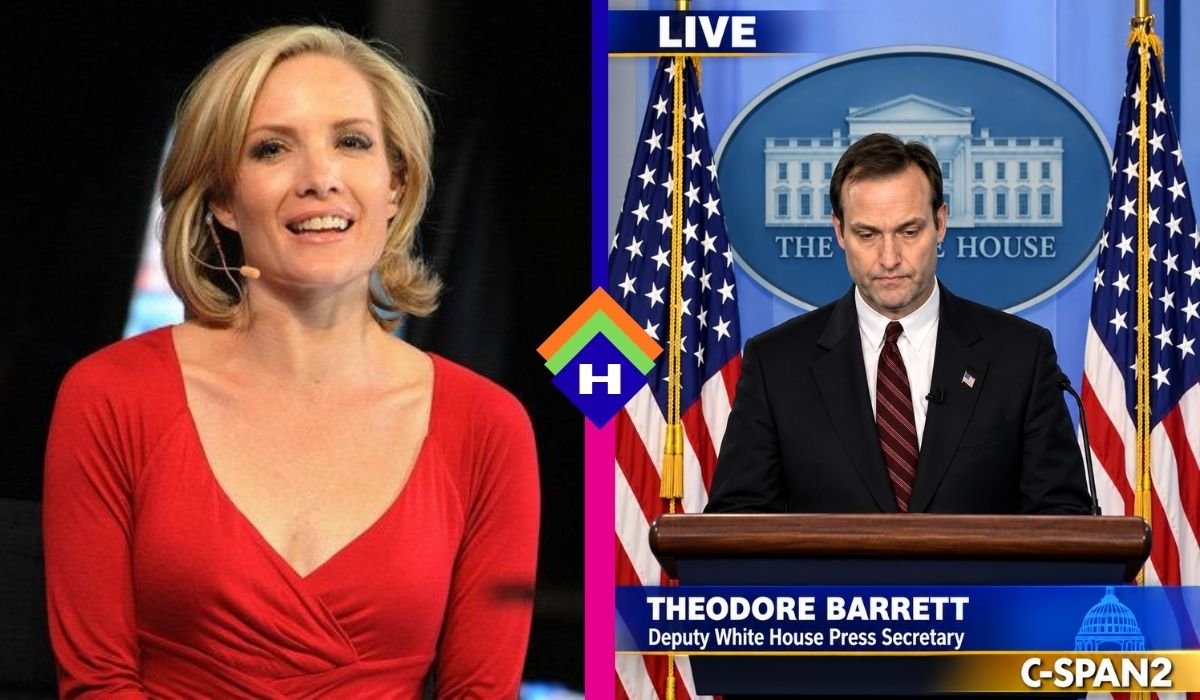
Theodore Barrett is one of those names that can send readers down a surprisingly deep internet rabbit hole. Search for him and you’ll quickly encounter questions about his wife, an alleged car accident, two children named Bobby and Megan, and a supposedly real White House press briefing.
The story certainly sounds convincing. A man presented as a White House official appears before reporters and calmly announces that his wife has died. Instead of stepping away from the podium to grieve, he continues with the day’s political business.
But there’s a crucial detail that changes the entire story: Theodore Barrett was never a real White House official.
The character appeared in a satirical video created by The Onion in 2008. The publication deliberately presented the sketch in the style of a genuine political press briefing, which helps explain why some viewers later mistook it for authentic news footage. India Today investigated the viral clip and identified it as fiction created by The Onion.
So, Who Is Theodore Barrett? Was his wife really killed in a car accident? Were Bobby and Megan real children? And why has this particular video continued to confuse people years after it first appeared?
Here’s what the available evidence tells us.
Quick Bio Information
| Information | Details |
|---|---|
| Name | Theodore Barrett |
| Real Person | No |
| Character Type | Fictional Political Character |
| Creator | The Onion |
| Year Of Viral Video | 2008 |
| Fictional Role | White House Deputy Press Secretary |
| Real White House Position | None |
| Fictional Wife | Presented As Barrett’s Wife |
| Wife’s Supposed Death | Car Accident In The Satirical Story |
| Fictional Children | Bobby And Megan |
| Real Children | None |
| President In The Setting | George W. Bush |
| Real Press Secretary In 2008 | Dana Perino |
| Real Deputy Press Secretary | Tony Fratto, Among Others |
| Video Type | Political Satire |
| Original Publisher | The Onion |
| Is The Press Conference Real? | No |
| Is The Accident Real? | No |
| Main Source Of Confusion | Realistic News-Style Presentation |
Who Is Theodore Barrett?
Theodore Barrett is a fictional political character created for a satirical production by The Onion.
In the video, Barrett is portrayed as a White House deputy press secretary appearing before members of the press. His delivery is serious, his surroundings look official, and the questions sound like the kind of exchanges viewers might expect from an actual government briefing.
The story takes an unusual turn when Barrett reveals that his wife has died in a car accident. Rather than ending the briefing, he quickly returns to matters of government business.
That’s where the satire comes in.
Barrett’s almost startling emotional restraint is deliberately exaggerated. He’s written as someone who treats a deeply personal tragedy as something that must be set aside because there is still work to do. The humor comes from the uncomfortable contrast between the seriousness of his supposed loss and his determination to continue the briefing.
India Today’s fact-check found no White House deputy press secretary named Theodore Barrett and traced the footage to The Onion, confirming that the character was fictional.
Why Did Theodore Barrett Become Famous Online?
Theodore Barrett became memorable largely because the video doesn’t look like a conventional comedy sketch.
There’s no obvious punchline at the beginning. Instead, viewers see a podium, reporters, formal questions, political language, and a man speaking in a controlled official manner. The entire setup is designed to resemble the kind of footage found in a genuine White House press briefing.
That realism is central to the joke, but it also created a problem once the clip began circulating without its original context.
A video can travel a long way online after being separated from the page where it first appeared. The headline, publisher, description, and explanation that identify something as satire can disappear when a clip is reposted or shared on another platform.
That appears to be part of what happened with the Theodore Barrett video. Viewers who encountered the footage without knowing its origin could reasonably wonder whether they were watching an obscure piece of political history.
The confusion wasn’t entirely surprising. The Onion has a long history of producing straight-faced political and news parodies that deliberately imitate real journalism. Contemporary reporting about the publication has noted how effectively its fake news format could resemble genuine news coverage.
The 2008 Theodore Barrett Video Explained
The viral clip dates to 2008 and presents Theodore Barrett as a fictional White House deputy press secretary.
The setup is deliberately uncomfortable. Barrett arrives at the briefing and tells reporters that his wife has died. Yet almost immediately, he turns the conversation back toward the president’s schedule and other matters of government business.
Reporters attempt to engage with the personal tragedy, but Barrett remains focused on his professional responsibilities. His language is formal and restrained, creating a striking contrast with the seriousness of what he has supposedly experienced.
That’s the heart of the satire.
Rather than simply telling a joke, the video takes the familiar language of political communication and pushes it to an absurd extreme. Barrett behaves as though even the death of his wife is merely another issue that has to be moved past so the day’s agenda can continue.
The approach was typical of The Onion’s broader style. The publication has long used a straight-faced presentation to make fictional stories appear surprisingly plausible. The Guardian described The Onion’s video news operation in 2008 as a highly realistic spoof of rolling news and noted that some viewers had mistaken its fictional material for real events.
Was Theodore Barrett A Real White House Official?
No. Theodore Barrett was not a real White House press secretary or deputy press secretary.
Historical records from the George W. Bush administration provide useful context here. The actual White House press operation in 2008 included documented officials such as Press Secretary Dana Perino and deputy press secretaries including Tony Fratto.
Theodore Barrett wasn’t one of them.
That distinction matters because the fictional video borrows heavily from the appearance of the real White House press operation. The setting may feel authentic, but that doesn’t mean the person standing behind the podium was a genuine government official.
India Today’s investigation specifically checked the claim and reported that no White House deputy press secretary named Theodore Barrett existed. It also traced the video to The Onion.
In other words, the setting is based on something real, while the central character and his personal story are fictional.
What Really Happened To Theodore Barrett’s Wife?
The Theodore Barrett wife accident never happened in real life.
In the satirical video, Barrett says that his wife has died in a car accident. The event is presented as a genuine tragedy within the fictional storyline, and his unusually detached response becomes the main source of the video’s dark humor.
But there was no real Theodore Barrett whose wife died in a crash under the circumstances shown in the video.
There is no genuine White House incident behind the story. The car accident exists only within the fictional scenario created by The Onion.
That’s the most important point for anyone searching for the Theodore Barrett wife accident story: the incident should not be treated as a real event in American political history.
Who Was Theodore Barrett’s Wife?
The woman presented as Theodore Barrett’s wife is also a fictional character.
Some online references identify her as Janie, but readers should be careful about treating that name as the identity of a real person. It belongs to the fictional story surrounding Barrett rather than to a documented White House family.
There is no verified real-life Theodore Barrett whose wife died in the circumstances shown in the video.
This distinction is particularly important because a search for Theodore Barrett wife can produce pages that discuss the character as though he were a genuine political figure. Repetition across websites doesn’t turn a fictional biography into a factual one.
The more reliable approach is to go back to the video’s source and examine the historical record of the White House officials who actually served during the period.
Why Was Theodore Barrett So Calm About His Wife’s Death?
Barrett’s unusual calmness is what makes the video so memorable.
The situation is intentionally extreme. A person has supposedly lost a spouse, yet instead of leaving the briefing or openly grieving, Barrett insists that there’s still work to be done.
He acknowledges the emotional pain but repeatedly returns to professional matters. The result is an uncomfortable contrast: the audience is confronted with a devastating personal event while Barrett behaves as though maintaining the day’s schedule is the only thing that matters.
That’s not an accident in the writing. It’s the central satirical device.
The video takes the familiar image of a disciplined political spokesperson and pushes it far beyond what would normally be believable. Barrett becomes an exaggerated version of someone who is expected to remain composed and professional at all times.
The absurdity comes from seeing that attitude applied to an event as serious as the supposed death of a spouse.
Did Theodore Barrett Really Identify His Wife’s Body?
No. The claim that Barrett identified his wife’s body is part of the fictional story told in the video.
Details like this make the scene feel more authentic because they give the supposed tragedy a specific and personal dimension. A viewer watching the footage without context might naturally assume that such a detailed statement must have come from a real news event.
But realistic dialogue doesn’t make a fictional event historical.
In fact, the video’s restrained style is one of the reasons it works so well as satire. Rather than relying on exaggerated costumes or broad comedy, The Onion presents the situation with the seriousness viewers associate with political journalism.
That makes the distinction between satire and reality especially important when the clip is encountered years later.
Who Are Bobby And Megan?
Bobby and Megan are the children mentioned in the fictional Theodore Barrett story.
Their names appear during the discussion surrounding Barrett’s family, which gives the supposed tragedy another emotional dimension. Reporters aren’t simply asking about Barrett’s wife; they’re also concerned about how the children are dealing with what has supposedly happened.
But Bobby and Megan weren’t real children of a White House official.
Because Theodore Barrett is fictional, there is no genuine Barrett family whose members can be traced through public records. Questions about the children’s ages, current lives, or whereabouts are based on characters created for the parody.
This is why searches for Theodore Barrett kids or Theodore Barrett children can be misleading. The names belong to the fictional narrative rather than to real people.
Who Created The Theodore Barrett Video?
The video was created by The Onion, the American publication known for political satire and fictional news presented in a straight-faced style.
That background is essential to understanding the clip. The Onion doesn’t normally present its fictional stories as conventional factual reporting. Its comedy often depends on taking the language and appearance of serious journalism and using them to tell deliberately absurd stories.
The Theodore Barrett video fits that tradition perfectly.
Independent reporting also supports the connection. India Today’s investigation traced the extended version of the viral clip to The Onion in 2008 and concluded that the story was fictional.
Contemporary coverage of The Onion’s video operation helps explain why the production could appear so convincing. The Guardian reported in 2008 that the publication’s online news videos were designed as realistic spoofs of television news and had already fooled people with fictional stories.
So the source of the Theodore Barrett story isn’t a forgotten government archive. It’s satire.
Why Did People Think The Theodore Barrett Video Was Real?
The simplest answer is context.
The clip looks like a political press briefing. There are reporters, a podium, formal questions, government references, and a speaker who never breaks character. None of those details immediately signal that the scene is fictional.
In fact, they’re designed to do the opposite.
The realistic style makes the satire more effective because viewers are encouraged to take Barrett seriously before recognizing the absurdity of his behavior. But when the clip is later removed from its original Onion context, that same realism can make it look like genuine archival footage.
This is one reason the story has survived online.
A short video can be copied, embedded, or reposted without its original description. A new audience may encounter only the most dramatic portion of the clip and have no idea where it came from.
The broader history of The Onion shows that this isn’t unique to Theodore Barrett. The publication’s realistic fake-news format has repeatedly led audiences to mistake satire for genuine reporting.
Theodore Barrett And The Real White House Press Office
The real White House press operation in 2008 gives us an important point of comparison.
George W. Bush was president, and Dana Perino served as White House press secretary. Other documented officials included deputy press secretaries such as Tony Fratto.
Those officials are part of the historical record. Theodore Barrett isn’t.
This distinction helps explain why the parody can feel so convincing. The video uses a real institution, a real political era, and a familiar type of government briefing. What it adds is a fictional official and an invented personal tragedy.
India Today’s fact-check used the real White House record as part of its investigation and found no official named Theodore Barrett.
That makes the historical picture fairly straightforward: the White House setting reflects a genuine political environment, but the person and family at the center of the story were created for satire.
Is There A Real Theodore Barrett Biography?
There isn’t a conventional biography of Theodore Barrett because he isn’t a real public figure.
That’s worth emphasizing because the internet can make fictional characters look surprisingly well documented. Once several websites repeat the same name, job title, family details, and supposed life events, the information can start to resemble an established biography.
But in this case, the apparent biography comes from a fictional video.
His supposed government position, his wife, his children, and the story surrounding his wife’s death all belong to the same satirical narrative. They shouldn’t be presented as verified facts about a real person.
For that reason, a responsible Theodore Barrett biography should focus on his origin as a fictional character, the 2008 video, the satirical purpose of the sketch, and the reasons viewers later mistook it for genuine news.
Why The Theodore Barrett Story Still Fascinates People
The continued interest in Theodore Barrett is a good example of how effectively satire can survive beyond its original context.
The video doesn’t need elaborate effects to appear authentic. It relies on familiar political surroundings, formal language, restrained acting, and the visual conventions of television news.
Those details give the fictional story a sense of legitimacy.
There’s also a compelling reason people keep asking about Barrett: the premise is deeply unusual. Even after learning that the story is fictional, viewers may still want to understand why the character reacts so coldly to the supposed death of his wife.
The answer is that the emotional disconnect is the joke.
The sketch takes the public image of the professional political spokesperson and stretches it to an absurd extreme. The result is a piece of satire that still feels relevant because audiences continue to recognize the communication style it’s parodying.
What The Theodore Barrett Story Teaches Us About Viral Information
Theodore Barrett’s story offers a useful lesson in media literacy: something that looks like news isn’t necessarily news.
A realistic podium, a formal speaker, and a room full of reporters can create a powerful impression of authenticity. But those things alone don’t establish that an event actually happened.
When a viral video makes an extraordinary claim, the better approach is to trace it back to its original source and compare the story with independent records.
That’s exactly what helps resolve the Theodore Barrett mystery. The video can be traced to The Onion, while historical information about the actual White House press operation shows that Theodore Barrett wasn’t a genuine official. India Today’s fact-check reached the same conclusion after investigating the footage.
The lesson extends well beyond this one video. Online content can lose its original context quickly, and satire can look remarkably similar to genuine reporting when it is produced carefully.
Final Thoughts
The real story behind Theodore Barrett isn’t a forgotten White House tragedy. It’s a story about satire, realism, and the way information can change when it travels across the internet.
There was no real Theodore Barrett serving in the White House. His wife didn’t die in a genuine car accident, and Bobby and Megan weren’t real children. The press conference was part of a satirical production created by The Onion in 2008.
What makes the video so memorable is how convincingly it imitates the language and appearance of political journalism. The setting feels authentic enough to make the fictional story seem possible, particularly when the clip is viewed without its original source.
Reliable fact-checking and historical context settle the question. Theodore Barrett is a fictional character, and the story surrounding his wife and family is fictional as well.
For anyone searching for the Theodore Barrett real story, that’s the key distinction to remember. The video exists, the character exists within that video, and the satire is real. The tragedy, however, never was.
Frequently Asked Questions About Theodore Barrett
Is Theodore Barrett A Real Person?
No. Theodore Barrett is a fictional character created for a satirical video by The Onion. India Today’s investigation found no White House deputy press secretary by that name and identified the viral footage as a work of fiction.
Was Theodore Barrett A Real White House Press Secretary?
No. Theodore Barrett wasn’t a real White House press secretary or deputy press secretary. During the period associated with the video, the actual White House press operation included officials such as Dana Perino and Tony Fratto.
Did Theodore Barrett’s Wife Really Die In A Car Accident?
No. The Theodore Barrett wife accident was part of the fictional storyline in the The Onion video. There was no real White House official named Theodore Barrett whose wife died in the circumstances portrayed.
Who Was Theodore Barrett’s Wife?
The woman presented as Barrett’s wife was a fictional character within the satirical story. Some online references identify her as Janie, but she wasn’t the real spouse of a White House official.
Did Theodore Barrett Have Children?
No real children can be connected to Theodore Barrett because the character is fictional. Bobby and Megan are fictional children mentioned within the parody.
Who Are Bobby And Megan?
Bobby and Megan are the fictional children associated with the Barrett storyline. Their names were created for the satirical video and don’t refer to real children of a White House official.
Who Created The Theodore Barrett Video?
The Onion created the satirical video featuring Theodore Barrett. India Today’s investigation traced an extended version of the clip to The Onion and confirmed that the story was fictional.
Why Did People Think The Theodore Barrett Video Was Real?
The video was deliberately produced to resemble a genuine White House press briefing. Its realistic setting, formal language, serious performance, and reporter interactions made it easy for some viewers to mistake the parody for authentic political footage, especially when the clip was shared without its original context.
Learn more and explore exciting content on: Ben Indra Biography: His Acting Career, Anna Faris Marriage, and Life After Hollywood











Leave a Reply