
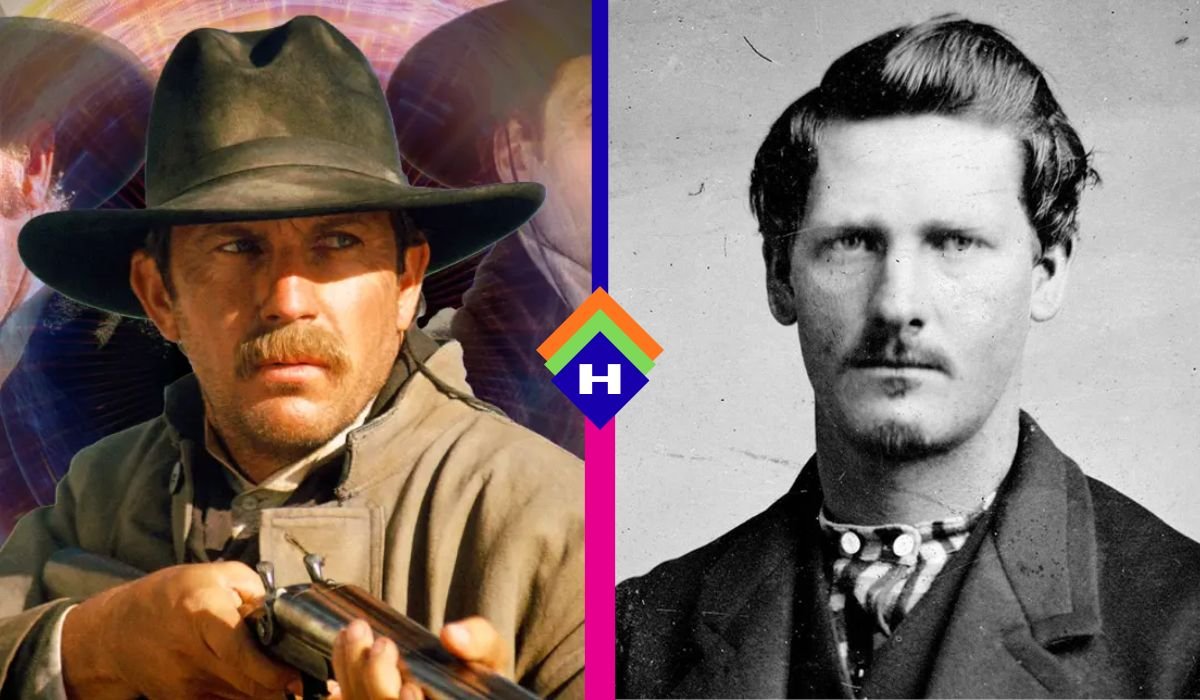
Few names from the American Old West carry the same weight as Wyatt Earp. For generations, his name has been tied to Tombstone, Arizona, the infamous OK Corral gunfight, Doc Holliday, and the violent disputes that defined life on the frontier. Yet the real Wyatt Earp was considerably more complicated than the fearless hero portrayed in countless Western movies.
Born in Illinois in 1848, Earp spent much of his life moving from one frontier community to another. He worked in law enforcement, but that was only part of his story. At different points, he earned money through gambling, saloon keeping, mining, horse racing, and real estate. His most famous chapter unfolded in Tombstone, where he and his brothers became caught up in an increasingly bitter dispute with Ike Clanton and other local Cowboys.
The OK Corral gunfight cemented Earp’s place in American history, but his larger reputation grew substantially after his death. Books, movies, and television productions gradually transformed him into a near-mythical Old West hero. Look beyond that familiar image, however, and a much more complicated man emerges—one whose real life is arguably more fascinating than the legend.
Quick Bio Information
| Fact | Information |
|---|---|
| Full Name | Wyatt Berry Stapp Earp |
| Born | March 19, 1848 |
| Birthplace | Monmouth, Illinois |
| Parents | Nicholas Earp And Virginia Ann Earp |
| Early Home States | Illinois, Iowa, Missouri, Kansas |
| First Wife | Urilla Sutherland |
| First Known Law Role | Constable In Lamar, Missouri |
| Wichita Career | Police Officer |
| Dodge City Role | Deputy Town Marshal And Later City Marshal |
| Famous Associate | Doc Holliday |
| Tombstone Period | Beginning In 1879 |
| Companion In Tombstone | Mattie Blaylock |
| Later Partner | Josephine Marcus |
| Famous Event | Gunfight At The OK Corral |
| Gunfight Date | October 26, 1881 |
| Later Occupations | Gambling, Mining, Saloon Keeping, Horse Racing, Real Estate |
| Memoir Collaborator | John H. Flood |
| Died | January 13, 1929 |
| Place Of Death | Los Angeles, California |
| Age At Death | 80 |
Wyatt Earp’s Early Life And Family
Wyatt Berry Stapp Earp was born on March 19, 1848, in Monmouth, Illinois, to Nicholas and Virginia Ann Earp. He grew up in a large family and spent his early years in Illinois and Iowa before the Earp family eventually moved west.
His brothers would remain important throughout his life. James and Virgil served the Union during the Civil War, and Wyatt reportedly tried as a teenager to follow them into military service. His father repeatedly brought him home, however, preventing the young Wyatt from joining them.
At 17, Earp finally left home and began working on the frontier. He hauled freight and later worked on railroad construction, experiences that exposed him to the rapidly changing American West. Railroads, mining towns, cattle operations, gambling, and law enforcement were reshaping communities across the region.
In 1869, Earp rejoined his family in Lamar, Missouri. His father had served as the township constable, and after Nicholas Earp resigned, Wyatt took the position. It was one of his earliest documented steps into law enforcement, years before Tombstone would make his name famous.
Wyatt Earp’s First Marriage And Personal Loss
One of the more overlooked chapters in the Wyatt Earp biography is his first marriage. On January 10, 1870, he married Urilla Sutherland in Lamar, Missouri.
Their marriage was tragically short. Urilla died later that same year. Older accounts commonly say that she died from typhoid, but the exact cause remains uncertain. Some historical accounts have suggested typhus or complications associated with childbirth. Because the surviving evidence doesn’t establish one definitive diagnosis, it’s more accurate to describe the cause of her death as uncertain.
The loss deeply affected Earp. He sold the house he had purchased and left Lamar, beginning a much more unsettled period of his life.
That tragedy is important when looking at Earp’s early years because his path toward becoming a famous lawman wasn’t straightforward. He spent years moving from place to place, taking different jobs and becoming familiar with the rougher side of frontier society.
From Wichita To Dodge City
During his years in Kansas, Earp became familiar with the saloons, gambling houses, and other businesses that were common in frontier towns. His own life wasn’t always neatly separated from that world. He faced arrests and legal troubles and spent considerable time around gamblers and prostitutes.
His career began moving more firmly toward law enforcement in Wichita. After helping a police officer track down a stolen wagon, Earp gained a reputation that helped him secure police work. In 1875, he joined the Wichita police force.
He later moved to Dodge City, where he became a deputy town marshal and eventually served as city marshal. Dodge City was a major cattle town, and keeping order there meant dealing with drinking, gambling, gun violence, and visiting cowboys.
Those years helped establish Earp’s reputation as a frontier lawman. They also brought him into contact with Doc Holliday, the gambler and gunman who would later become one of the most recognizable figures in the Earp story.
How Wyatt Earp Met Doc Holliday
Doc Holliday had trained as a dentist, but he became far better known during his lifetime as a gambler and gunman. Earp and Holliday became acquainted during Earp’s years in Dodge City.
Their relationship would eventually become one of the most famous friendships in Western history. Popular films have often portrayed the pair as inseparable partners with an almost legendary bond. Their historical association was real, but later entertainment added plenty of dramatic detail.
Holliday eventually traveled to Tombstone, where he became closely connected with the Earp family as tensions with local Cowboys intensified. His decision to stand alongside Wyatt, Virgil, and Morgan during the October 1881 confrontation helped make the event even more memorable.
Why Wyatt Earp Went To Tombstone
In late 1879, Earp traveled to Tombstone, Arizona Territory, with his companion Mattie Blaylock. Tombstone was expanding rapidly after the discovery of silver, attracting miners, businessmen, gamblers, ranchers, and other people searching for wealth and opportunity.
Several members of the Earp family were also in the area. Virgil Earp eventually became the town marshal, while Wyatt worked in and around law enforcement as well as other businesses.
Tombstone wasn’t simply a lawless settlement filled with gunfighters. It was a growing mining community with competing political, economic, and social interests. Ranchers, miners, businessmen, law officers, gamblers, and Cowboys all had different ideas about how the community should be run.
That broader environment helps explain why the eventual dispute between the Earps and the Cowboys became so serious. The conflict wasn’t created by one isolated argument. It developed within a town where personal rivalries, business interests, politics, and questions of law enforcement often overlapped.
The Conflict With Ike Clanton
The events leading to the OK Corral Gunfight unfolded over several months rather than in a single dramatic confrontation. In March 1881, Cowboys robbed a Tombstone stagecoach and killed its driver. Earp joined the effort to identify and find those responsible.
During the investigation, he sought assistance from Ike Clanton, a rancher who had connections to some of the Cowboys. Earp hoped Clanton could provide information that would help locate the men wanted for the robbery.
The relationship soon deteriorated. Clanton became increasingly suspicious of the Earps, while the Earp brothers viewed Clanton and his associates as an emerging threat. Personal disagreements became entangled with questions about law enforcement, business interests, and political influence in Tombstone.
By October, the situation had become dangerous. Ike and his brother Billy Clanton were joined by brothers Frank and Tom McLaury, and the possibility of an armed confrontation was becoming increasingly difficult to ignore.
What Happened At The OK Corral?
On October 26, 1881, Wyatt Earp, Virgil Earp, Morgan Earp, and Doc Holliday confronted Ike Clanton, Billy Clanton, Frank McLaury, and Tom McLaury in Tombstone.
The confrontation lasted less than a minute, but its consequences would last for generations.
Frank McLaury, Tom McLaury, and Billy Clanton were killed. Virgil Earp, Morgan Earp, and Doc Holliday were wounded but survived. Wyatt Earp escaped the shooting without injury.
The event became known as the Gunfight At The OK Corral, although the actual shooting took place in an area near the corral rather than inside the famous structure itself.
Over time, the incident was turned into a straightforward Western story about heroic lawmen facing dangerous outlaws. The historical circumstances were considerably more complicated. The men were already involved in a bitter local feud, and the legal and political issues surrounding the confrontation played an important role in what followed.
The Legal Aftermath And The Earp Vendetta
The shooting didn’t immediately turn Wyatt Earp into a celebrated hero. Instead, it triggered a legal battle.
Ike Clanton filed murder charges against Wyatt, Virgil, Morgan, and Doc Holliday. Wyatt and Holliday were arrested and held while the case was examined. On November 29, 1881, Judge Wells Spicer ruled in favor of the Earps and Holliday, concluding that the evidence did not justify holding them for murder.
The violence, however, was far from over.
On December 28, Virgil Earp was ambushed and seriously wounded. His attackers were never conclusively identified. Then, on March 18, 1882, Morgan Earp was shot and killed while playing pool in a Tombstone saloon. Wyatt was nearby and survived the attack.
Morgan’s murder pushed Wyatt toward retaliation. He and his associates pursued men they believed were responsible. Several suspects were killed during what became known as the Earp Vendetta.
Eventually, Wyatt and his group left Arizona Territory. The aftermath is an important part of understanding the historical Earp because it complicates the traditional hero narrative. He had served as a lawman, but after Morgan’s murder he also participated in violent retaliation outside the normal court process.
Wyatt Earp’s Life After Tombstone
After leaving Tombstone, Earp continued moving around the American West. His life was no longer centered on formal law enforcement.
He and Josephine Marcus became partners, and the two traveled through different Western communities. Earp earned money through gambling, horse racing, mining, saloon businesses, and real estate. He occasionally worked in law enforcement as well, while maintaining connections with people involved in the developing entertainment industry.
During the 1890s, Earp and Josephine spent time in California and later traveled to Nome, Alaska, during the gold rush. They operated a saloon and gambling ventures there before eventually returning to California.
By the early 20th century, Earp was living largely as a businessman and mining prospector. He continued looking for opportunities rather than settling into the simple retired-lawman role that later stories would give him.
Wyatt Earp And Josephine Marcus
Josephine Marcus became one of the most important people in Earp’s later life. The two were together from the early 1880s until his death in 1929.
They traveled extensively and pursued business opportunities together. Their relationship lasted far longer than Earp’s earlier relationships, including his brief marriage to Urilla Sutherland and his years with Mattie Blaylock.
It’s also worth being careful about their marital status. Josephine later referred to herself as Josephine Earp, but there is no reliable record establishing that she and Wyatt formally married.
Their decades together provide another reminder that Earp’s life extended far beyond Tombstone. He spent more than four decades after the OK Corral building a life that had little to do with the gunfight that ultimately made him famous.
Wyatt Earp’s Final Years And Death
During his later years, Earp spent considerable time in California. He became increasingly interested in how his story would be remembered and developed connections with people working in the early Western film industry.
In 1923, he began working on his memoirs with his personal secretary, John H. Flood. The project didn’t receive much enthusiasm during his lifetime, and Earp never witnessed the enormous popularity that later accounts of his life would achieve.
Earp died at his Los Angeles home on January 13, 1929, at age 80. He was the last surviving participant in the famous OK Corral gunfight.
His death came at an interesting moment. Western films were becoming increasingly popular, and Earp had already begun developing relationships with people connected to Hollywood. He wouldn’t live to see just how dramatically his public image would change after his death.
How Wyatt Earp Became A Legend
The biggest transformation in Earp’s reputation came in 1931, when Stuart N. Lake published Wyatt Earp: Frontier Marshal.
The book became a bestseller and helped turn Earp from a relatively obscure historical figure into a national folk hero. Lake had met Earp, but his biography presented a highly polished version of the man’s life. Lake later acknowledged that some quotations attributed to Earp had been invented.
That admission is crucial when evaluating modern claims about Earp. Lake’s book remains important because it shaped Earp’s cultural legacy, but it shouldn’t be treated as an entirely reliable firsthand account.
The timing also mattered. The biography appeared during the Great Depression, when Americans were facing enormous economic and social uncertainty. Stories about courage, independence, and larger-than-life frontier characters had obvious appeal during that period.
Lake’s version of Earp helped establish the template that later filmmakers would follow: a fearless lawman standing against disorder in a dangerous frontier town.
The Real Wyatt Earp Vs. The Hollywood Legend
Hollywood eventually made Wyatt Earp one of the defining characters of the Western genre. Actors including Henry Fonda, Burt Lancaster, James Garner, Kurt Russell, and Kevin Costner have all portrayed versions of him.
Those performances kept Earp’s name alive for new generations, but they also simplified the historical record. The real Earp spent years around gamblers, prostitutes, saloons, mining ventures, and business speculation. He was a lawman, but law enforcement represented only one part of his long life.
His relationship with violence was equally complicated. The OK Corral confrontation was followed by retaliation and killings during the Earp Vendetta. At the same time, it would be unfair to reduce his entire life to those violent episodes.
The most useful way to understand Earp is to see him as a product of his time: a man trying to find economic opportunity and personal security in a rapidly changing West. Sometimes he pursued those goals through law enforcement; at other times, he relied on gambling, business, mining, or other opportunities available to him.
Why Wyatt Earp Still Matters
The enduring interest in Wyatt Earp isn’t simply about who won the OK Corral Gunfight. His life offers a window into a period when American communities were changing rapidly and the boundaries between law enforcement, politics, business, gambling, and violence could be surprisingly blurred.
Earp’s story also demonstrates how historical reputations are made. The man who died in 1929 had no control over the books, films, and television productions that would later transform him into an American icon.
That makes his biography especially valuable today. Readers can appreciate the drama of the Old West while recognizing that historical figures rarely fit neatly into categories such as hero and villain.
Final Thoughts
Wyatt Earp remains one of the most recognizable names in American frontier history because his life sits at the intersection of real events and powerful mythology.
He was a lawman who became famous through the OK Corral Gunfight, but he was never only a lawman. His life included personal tragedy, family loyalty, gambling, business ventures, mining, travel, violence, and decades spent searching for ways to build a secure future.
The most important lesson from his story may be the need to separate history from legend. The heroic Wyatt Earp of Hollywood is memorable, but the historical Earp was much more complicated. He lived in a world where law enforcement and personal violence could overlap, where economic opportunities could disappear quickly, and where reputation could become almost as valuable as money.
In the end, Earp’s greatest legacy may not be the gunfight itself. It may be the extraordinary transformation that followed: a complicated frontier figure became an American folk hero whose name still helps define the popular image of the Old West more than a century later.
Frequently Asked Questions About Wyatt Earp
Who Was Wyatt Earp?
Wyatt Earp was an American frontier lawman and businessman best known for his role in the 1881 Gunfight At The OK Corral in Tombstone, Arizona Territory. Over his lifetime, he also worked in gambling, mining, saloon keeping, horse racing, and real estate.
When Was Wyatt Earp Born?
Wyatt Earp was born on March 19, 1848, in Monmouth, Illinois. He spent his childhood in several Midwestern and Western locations before beginning his own working life on the frontier.
What Happened At The OK Corral?
On October 26, 1881, Wyatt Earp, Virgil Earp, Morgan Earp, and Doc Holliday confronted Ike Clanton, Billy Clanton, Frank McLaury, and Tom McLaury in Tombstone. Billy Clanton and both McLaury brothers were killed. Virgil Earp, Morgan Earp, and Doc Holliday were wounded, while Wyatt Earp escaped without injury.
Who Was Doc Holliday To Wyatt Earp?
Doc Holliday was a gambler and gunman who became acquainted with Earp during his years in Dodge City. Their association continued in Tombstone, where Holliday stood with the Earp brothers during the famous gunfight.
Who Was Wyatt Earp’s First Wife?
Wyatt Earp married Urilla Sutherland on January 10, 1870. She died later that year. Historical accounts don’t completely agree on the exact cause of her death, so it’s more accurate to describe it as uncertain rather than present typhoid as an established fact.
Who Was Josephine Marcus?
Josephine Marcus was Earp’s longtime partner during the last several decades of his life. The couple traveled and worked together across the West before settling in California. They remained together until Earp’s death in 1929.
When Did Wyatt Earp Die?
Wyatt Earp died on January 13, 1929, in Los Angeles, California. He was 80 years old. His death came before the 1931 publication of Stuart N. Lake’s bestselling biography that dramatically expanded his public reputation.
Was Wyatt Earp Really The Hero Shown In Western Movies?
The historical record is considerably more complicated. Earp did work in law enforcement, but he also gambled, ran businesses, prospected for mining opportunities, and participated in violent retaliation after Morgan Earp’s murder. Later books and movies greatly simplified his life, turning him into a heroic symbol of the Old West.
Learn more and explore exciting content on: Harriet Tubman: The Inspiring Story of a Woman Who Fought for Freedom












Leave a Reply